
- How Blue Light Impacts Your Sleep Quality
- Comparing Whey and Plant-Based Protein: Which is Best?
- How Long Does Nicotine Remain in Your System?
- The Best Time of Day to Drink Bone Broth to Maximize Health Benefits
- 8 Ways to Increase Dopamine Naturally
- 7 Best Breads for Maintaining Stable Blood Sugar
- Gelatin vs. Collagen: Which is Best for Skin, Nails, and Joints?
- The Long-Term Effects of Daily Turmeric Supplements on Liver Health
- Could Your Grocery Store Meat Be Causing Recurring UTIs?
- Are You Making This Expensive Thermostat Error This Winter?
Brain Disconnects Spotted in Parkinson’s Patients With Visual Hallucinations
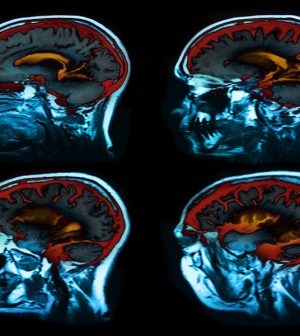
Researchers say they’ve discovered a possible explanation for visual hallucinations in people with Parkinson’s disease.
The researchers conducted brain scans on 15 patients with visual hallucinations, 40 patients without visual hallucinations, and a control group of 15 people without Parkinson’s disease.
In all of the Parkinson’s disease patients, numerous areas of the brain communicated less with the rest of the brain, compared to the control group, the Netherlands researchers noted.
But patients with visual hallucinations had several additional brain areas with decreased connectivity with the rest of the brain, especially areas that are important in maintaining attention and processing of visual information.
However, the study did not prove that this caused the hallucinations.
The study was published online Sept. 27 in the journal Radiology.
“Visual hallucinations in Parkinson’s disease are frequent and debilitating,” study author Dr. Dagmar Hepp, from VU University Medical Center in Amsterdam, said in a journal news release.
“Our aim was to study the mechanism underlying visual hallucinations in Parkinson’s disease, as these symptoms are currently poorly understood,” Hepp added.
Future research could explore whether stimulating the brain areas with decreased connectivity could help treat visual hallucinations in people with Parkinson’s disease, the study authors suggested.
More information
The Parkinson’s Disease Foundation has more on Parkinson’s disease.
Source: HealthDay
Copyright © 2026 HealthDay. All rights reserved.
Related
-
 Navigating Your Midlife Crisis: Embracing New Possibilities
A midlife crisis can open doors to personal growth...
- December 4, 2025
-
 Want A Happier Hospital? Hire More Nurses, Study Says
Adding even a few extra nurses can dramatically reduce...
- November 20, 2025
-
 Plasma Treatment Shows Promise For Menopause Symptoms Among Breast Cancer Survivors
Plasma infusions may help breast cancer survivors avoid genital...
- November 20, 2025
-
 Self-Hypnosis Can Thwart Hot Flashes
Self-hypnosis might help some women in menopause find relief...
- November 14, 2025






