
- How Blue Light Impacts Your Sleep Quality
- Comparing Whey and Plant-Based Protein: Which is Best?
- How Long Does Nicotine Remain in Your System?
- The Best Time of Day to Drink Bone Broth to Maximize Health Benefits
- 8 Ways to Increase Dopamine Naturally
- 7 Best Breads for Maintaining Stable Blood Sugar
- Gelatin vs. Collagen: Which is Best for Skin, Nails, and Joints?
- The Long-Term Effects of Daily Turmeric Supplements on Liver Health
- Could Your Grocery Store Meat Be Causing Recurring UTIs?
- Are You Making This Expensive Thermostat Error This Winter?
You and Your Pooch May Have Similar Tummy Bacteria
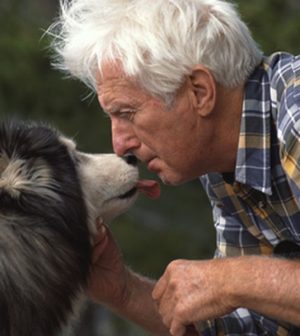
The makeup of bacteria in your dog’s digestive tract may be more like your own than you think, researchers say.
In a new study, investigators analyzed gut bacteria populations (“microbiomes”) in two dog breeds. The findings showed that the genes in the dogs’ microbiomes had many similarities with humans. In fact, they were more similar to humans than the microbiomes of pigs or mice.
“The results of this comparison suggest that we are more similar to man’s best friend than we originally thought,” said study corresponding author Luis Pedro Coelho, from the European Molecular Biology Laboratory in Heidelberg, Germany.
The report was published online April 18 in the journal Microbiome.
“These findings suggest that dogs could be a better model for nutrition studies than pigs or mice, and we could potentially use data from dogs to study the impact of diet on gut microbiota in humans, and humans could be a good model to study the nutrition of dogs,” Coelho said in a journal news release.
The researchers also found that changes in protein and carbohydrate levels in the diet had similar effects on the gut microbiomes of dogs as on humans.
The microbiomes of overweight and obese dogs were more responsive to a high-protein diet than the microbiomes of lean dogs, a finding consistent with the idea that healthy microbiomes are more resilient, according to the study authors.
“Many people who have pets consider them as part of the family and, like humans, dogs have a growing obesity problem. Therefore, it is important to study the implications of different diets,” Coelho added.
More information
The University of Utah has more on the human microbiome.
Source: HealthDay
Copyright © 2026 HealthDay. All rights reserved.
Related
-
 Navigating Your Midlife Crisis: Embracing New Possibilities
A midlife crisis can open doors to personal growth...
- December 4, 2025
-
 Want A Happier Hospital? Hire More Nurses, Study Says
Adding even a few extra nurses can dramatically reduce...
- November 20, 2025
-
 Plasma Treatment Shows Promise For Menopause Symptoms Among Breast Cancer Survivors
Plasma infusions may help breast cancer survivors avoid genital...
- November 20, 2025
-
 Self-Hypnosis Can Thwart Hot Flashes
Self-hypnosis might help some women in menopause find relief...
- November 14, 2025






