
- How Blue Light Impacts Your Sleep Quality
- Comparing Whey and Plant-Based Protein: Which is Best?
- How Long Does Nicotine Remain in Your System?
- The Best Time of Day to Drink Bone Broth to Maximize Health Benefits
- 8 Ways to Increase Dopamine Naturally
- 7 Best Breads for Maintaining Stable Blood Sugar
- Gelatin vs. Collagen: Which is Best for Skin, Nails, and Joints?
- The Long-Term Effects of Daily Turmeric Supplements on Liver Health
- Could Your Grocery Store Meat Be Causing Recurring UTIs?
- Are You Making This Expensive Thermostat Error This Winter?
Goats Can Read Human Emotions, Prefer Happy Faces
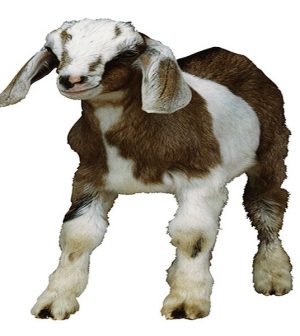
If you’re happy and you know it, so will a goat.
New research suggests that goats can read people’s facial expressions and prefer those who appear happy.
The study included 20 goats that were shown pairs of images of the same person’s face with happy or angry expressions. The goats were more likely to interact with the happy images, approaching them and exploring them with their snouts.
This was particularly true when the happy faces were placed on the right of the test arena, suggesting that goats use the left hemisphere of their brains to process positive emotion, according to the researchers.
The study was led by Queen Mary University of London researchers and was published Aug. 28 in the journal Royal Society Open Science.
“The study has important implications for how we interact with livestock and other species, because the abilities of animals to perceive human emotions might be widespread and not just limited to pets,” said Alan McElligott, who led the study. He is now based at the University of Roehampton in London.
The study’s first author, Christian Nawroth, is now at Leibniz Institute for Farm Animal Biology in Dummerstorf, Germany. “We already knew that goats are very attuned to human body language, but we did not know how they react to different human emotional expressions, such as anger and happiness,” Nawroth said in a Queen Mary University news release.
“Here, we show for the first time that goats do not only distinguish between these expressions, but they also prefer to interact with happy ones,” he said.
Study co-author Natalia Albuquerque, from the University of Sao Paulo in Brazil, added that “the study of emotion perception has already shown very complex abilities in dogs and horses. However, to date, there was no evidence that animals such as goats were capable of reading human facial expressions. Our results open new paths to understanding the emotional lives of all domestic animals.”
Bernard the goat makes his choice. Video: C. Nawroth
More information
The Smithsonian’s National Zoo and Conservation Biology Institute has more on goats.
Source: HealthDay
Copyright © 2026 HealthDay. All rights reserved.
Related
-
 Navigating Your Midlife Crisis: Embracing New Possibilities
A midlife crisis can open doors to personal growth...
- December 4, 2025
-
 Want A Happier Hospital? Hire More Nurses, Study Says
Adding even a few extra nurses can dramatically reduce...
- November 20, 2025
-
 Plasma Treatment Shows Promise For Menopause Symptoms Among Breast Cancer Survivors
Plasma infusions may help breast cancer survivors avoid genital...
- November 20, 2025
-
 Self-Hypnosis Can Thwart Hot Flashes
Self-hypnosis might help some women in menopause find relief...
- November 14, 2025






