
- How Blue Light Impacts Your Sleep Quality
- Comparing Whey and Plant-Based Protein: Which is Best?
- How Long Does Nicotine Remain in Your System?
- The Best Time of Day to Drink Bone Broth to Maximize Health Benefits
- 8 Ways to Increase Dopamine Naturally
- 7 Best Breads for Maintaining Stable Blood Sugar
- Gelatin vs. Collagen: Which is Best for Skin, Nails, and Joints?
- The Long-Term Effects of Daily Turmeric Supplements on Liver Health
- Could Your Grocery Store Meat Be Causing Recurring UTIs?
- Are You Making This Expensive Thermostat Error This Winter?
Selecting the Right Style of Yoga for You
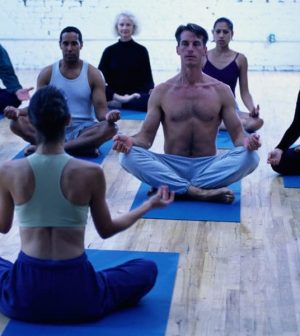
Yoga has many benefits, from increasing flexibility to reducing stress.
The practice offers so much because of its multi-dimensional nature. In addition to its fluid exercises, called asanas or poses, it focuses on correct breathing, posture and meditation with a philosophy that strives for a balance of body, mind and spirit.
There are many styles of yoga offered in the United States, most of which are rooted in the classic hatha yoga.
Popular hatha yoga styles include: Ananda, Anusara, Ashtanga, Bikram, Iyengar, Kripalu, Kundalini and Viniyoga.
Not every style is right for every body.
For instance Bikram, or “hot yoga,” is done in a room heated to 105 degrees Fahrenheit to encourage heavy sweating. This can raise your own body temperature well over 100 degrees F, and that’s not safe for everyone. There’s also been some criticism about not enough water breaks being offered during sessions at some studios. Because of its excessive heat exposure, Bikram yoga may not be appropriate for people with heart or lung disease, or who have experienced heatstroke in the past.
Fortunately, there are many other interesting styles to explore.
For instance, Iyengar (pronounced eye-n-gar) yoga incorporates props into poses and focuses on symmetry and body alignment. Viniyoga (pronounced vee-knee-yoga) is a very gentle style, often recommended for beginners and when yoga is used as a healing therapy. Sivananda (pronounced siva-nanda) also focuses on gentle movement along with an emphasis on deep relaxation.
At the other extreme, Kundalini (pronounced kun-doo-lini) is designed to release a flow of energy through breathing and chanting.
These are just a few of the options. Be sure to ask questions as you investigate yoga classes and studios so you know where the emphasis is placed and that your personal goals will be met.
More information
The magazine Yoga Journal has an online tool to help you locate information on yoga teachers, trained in various types of yoga, across the country.
Source: HealthDay
Copyright © 2026 HealthDay. All rights reserved.
Related
-
 Navigating Your Midlife Crisis: Embracing New Possibilities
A midlife crisis can open doors to personal growth...
- December 4, 2025
-
 Want A Happier Hospital? Hire More Nurses, Study Says
Adding even a few extra nurses can dramatically reduce...
- November 20, 2025
-
 Plasma Treatment Shows Promise For Menopause Symptoms Among Breast Cancer Survivors
Plasma infusions may help breast cancer survivors avoid genital...
- November 20, 2025
-
 Self-Hypnosis Can Thwart Hot Flashes
Self-hypnosis might help some women in menopause find relief...
- November 14, 2025






