
- How Blue Light Impacts Your Sleep Quality
- Comparing Whey and Plant-Based Protein: Which is Best?
- How Long Does Nicotine Remain in Your System?
- The Best Time of Day to Drink Bone Broth to Maximize Health Benefits
- 8 Ways to Increase Dopamine Naturally
- 7 Best Breads for Maintaining Stable Blood Sugar
- Gelatin vs. Collagen: Which is Best for Skin, Nails, and Joints?
- The Long-Term Effects of Daily Turmeric Supplements on Liver Health
- Could Your Grocery Store Meat Be Causing Recurring UTIs?
- Are You Making This Expensive Thermostat Error This Winter?
Live in a Wildfire Zone? Be Prepared
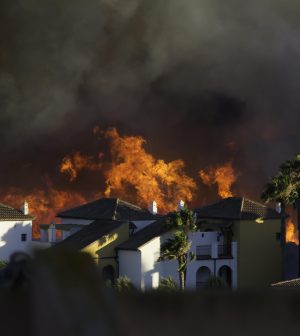
More Americans now live in wildfire zones as wildfire seasons have become longer, with hotter, faster-moving fires.
If you’re one of those who live in a location threatened by wildfires, it’s important to be prepared, according to Environment America, a national network of 30 state environmental groups.
You should have a plan for evacuation in which everyone in your household knows the plan, including a designated place to meet outside the fire zone.
Make electronic copies of all your critical documents, including identification and proof of insurance. Be sure you can access them remotely with secure passwords.
Make evacuation plans that include several routes. Keep a first aid kit, prescription medications, flashlights, food and water for people and pets, phone/device chargers, extra credit cards, cash and N95 masks in your car’s trunk during fire season. Avoid flammable products.
If you don’t have a car, keep those same items in a “go bag” and leave it somewhere easy to reach.
Keep your car fueled with enough gas to reach your evacuation destination.
You can also help to protect your home by repairing or renovating using fire-resistant materials, clearing leaves and other flammable materials within 30 feet of your home and creating a “clean room” in your home. A clean room is a space within your home set up to prevent wildfire smoke from getting in as much as possible, according to airnow.gov.
Invest in “hardening” your home by making its structure more fire-resistant. Less expensive options include vents, rain gutters and chimney reinforcements, and more expensive choices include replacements for your roof, walls and windows.
If there is a wildfire near your area, you can monitor air quality, follow local agencies to learn about evacuation orders, track active fires on weather.gov or fire.airnow.gov and sign up for emergency alerts at ready.gov.
More information
Ready.gov has more on wildfires and preparation.
SOURCE: Environment America, news release, June 20, 2022
Source: HealthDay
Copyright © 2026 HealthDay. All rights reserved.
Related
-
 Navigating Your Midlife Crisis: Embracing New Possibilities
A midlife crisis can open doors to personal growth...
- December 4, 2025
-
 Want A Happier Hospital? Hire More Nurses, Study Says
Adding even a few extra nurses can dramatically reduce...
- November 20, 2025
-
 Plasma Treatment Shows Promise For Menopause Symptoms Among Breast Cancer Survivors
Plasma infusions may help breast cancer survivors avoid genital...
- November 20, 2025
-
 Self-Hypnosis Can Thwart Hot Flashes
Self-hypnosis might help some women in menopause find relief...
- November 14, 2025






