
- How Blue Light Impacts Your Sleep Quality
- Comparing Whey and Plant-Based Protein: Which is Best?
- How Long Does Nicotine Remain in Your System?
- The Best Time of Day to Drink Bone Broth to Maximize Health Benefits
- 8 Ways to Increase Dopamine Naturally
- 7 Best Breads for Maintaining Stable Blood Sugar
- Gelatin vs. Collagen: Which is Best for Skin, Nails, and Joints?
- The Long-Term Effects of Daily Turmeric Supplements on Liver Health
- Could Your Grocery Store Meat Be Causing Recurring UTIs?
- Are You Making This Expensive Thermostat Error This Winter?
AI Outperforms Eye Docs in Managing Glaucoma
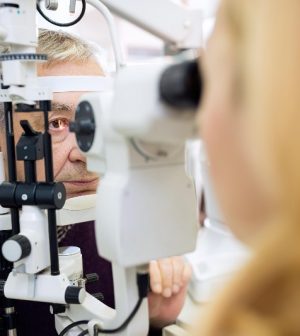
FRIDAY, Feb. 23, 2024 (HealthDay news) — Artificial intelligence can match and even outperform human eye doctors in diagnosing and treating glaucoma, a new study finds.
The GPT-4 system from OpenAI did as well or better than ophthalmologists in assessing 20 different patients for glaucoma and retinal disease, researchers report Feb. 22 in the journal JAMA Ophthalmology.
“AI was particularly surprising in its proficiency in handling both glaucoma and retina patient cases, matching the accuracy and completeness of diagnoses and treatment suggestions made by human doctors in a clinical note format,” said senior study author Dr. Louis Pasquale, deputy chair for ophthalmology research at the New York Eye and Ear Infirmary of Mount Sinai.
The results suggest that AI could play an important support role for ophthalmologists as they try to manage patients’ glaucoma.
“Just as the AI application Grammarly can teach us how to be better writers, GPT-4 can give us valuable guidance on how to be better clinicians, especially in terms of how we document findings of patient exams,” Pasquale said in an infirmary news release.
Glaucoma is notoriously difficult to diagnose. About half of the 3 million Americans with glaucoma don’t know they have it, according to the American Academy of Ophthalmology (AAO).
Glaucoma occurs when fluid pressure builds up inside the eye, damaging the optic nerve and creating blind spots in a person’s vision, the AAO says.
For this study, researchers used a basic set of 20 questions about glaucoma and retina disease to test the AI program against a set of 12 attending ophthalmologists and three senior trainees.
Responses were then statistically analyzed and rated for accuracy and thoroughness.
AI outperformed eye doctors in response to glaucoma diagnosis and management, results show. For retinal disease, AI matched humans in accuracy, but exceeded them in completeness.
Advanced AI tools like GPT-4 are trained on vast amounts of data, text and images, researchers noted.
Lead researcher Dr. Andy Huang, an ophthalmology resident at the New York Eye and Ear Infirmary of Mount Sinai, said the results show AI can help treat eye diseases.
“It could serve as a reliable assistant to eye specialists by providing diagnostic support and potentially easing their workload, especially in complex cases or areas of high patient volume,” Huang said.
“For patients, the integration of AI into mainstream ophthalmic practice could result in quicker access to expert advice, coupled with more informed decision-making to guide their treatment,” Huang added.
More information
The American Academy of Ophthalmology has more about glaucoma.
SOURCE: New York Eye and Ear Infirmary of Mount Sinai, news release, Feb. 22, 2024
Source: HealthDay
Copyright © 2026 HealthDay. All rights reserved.
Related
-
 Navigating Your Midlife Crisis: Embracing New Possibilities
A midlife crisis can open doors to personal growth...
- December 4, 2025
-
 Want A Happier Hospital? Hire More Nurses, Study Says
Adding even a few extra nurses can dramatically reduce...
- November 20, 2025
-
 Plasma Treatment Shows Promise For Menopause Symptoms Among Breast Cancer Survivors
Plasma infusions may help breast cancer survivors avoid genital...
- November 20, 2025
-
 Self-Hypnosis Can Thwart Hot Flashes
Self-hypnosis might help some women in menopause find relief...
- November 14, 2025