
- How Blue Light Impacts Your Sleep Quality
- Comparing Whey and Plant-Based Protein: Which is Best?
- How Long Does Nicotine Remain in Your System?
- The Best Time of Day to Drink Bone Broth to Maximize Health Benefits
- 8 Ways to Increase Dopamine Naturally
- 7 Best Breads for Maintaining Stable Blood Sugar
- Gelatin vs. Collagen: Which is Best for Skin, Nails, and Joints?
- The Long-Term Effects of Daily Turmeric Supplements on Liver Health
- Could Your Grocery Store Meat Be Causing Recurring UTIs?
- Are You Making This Expensive Thermostat Error This Winter?
Wastewater Can Accurately Predict COVID-19 Surges
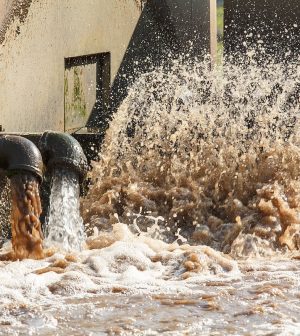
Keeping tabs on COVID-19 outbreaks is as easy as tracking a city’s wastewater, a new study says.
Levels of the COVID virus, SARS-CoV-2, found in wastewater samples accurately predicted by a week the rise and fall of case counts in a community, researchers reported June 23 in the The Journal of Infectious Diseases.
“We learned during 2020 that rising SARS-CoV-2 virus in wastewater provided a two-week heads up of coming COVID visits to hospitals and clinics,” senior researcher Dr. Timothy Schacker, a professor of infectious diseases at the University of Minnesota Medical School, said in a news release.
“This ongoing work demonstrates the continued importance of wastewater surveillance to public health planning for our state’s hospitals and clinics,” he added.
For the study, researchers took 215 wastewater samples from the Twin Cities Wastewater Treatment Plant between January 2022 and August 2024.
The plant serves about 1.8 million residents of the region encompassing Minneapolis and St. Paul, Minn., researchers said in background notes.
The team compared the virus levels found in those samples against reported COVID cases among people treated by Fairview Health Services, a Minnesota-based health system.
Fairview reported nearly 6,900 COVID cases during the 32-month study period among people who live in the area served by the treatment plant, researchers said.
Three distinct COVID case surges occurred over that time, and levels of virus in wastewater accurately predicted each surge, researchers said.
COVID virus levels and cases rapidly increased during the summer months and persisted through the winter, then rapidly fell in the spring, results show.
“If this pattern continues, it suggests that SARS-CoV-2 may not have the same seasonal patterns as other respiratory viruses such as influenza or RSV, which increase during the fall and winter months,” researchers wrote.
The University of Minnesota’s ongoing wastewater study continues to monitor COVID, influenza, RSV, monkeypox and measles, researchers said.
More information
The U.S. Centers for Disease Control and Prevention has more on wastewater tracking.
SOURCES: University of Minnesota, news release, June 23, 2025; The Journal of Infectious Diseases, May 8, 2025
Source: HealthDay
Copyright © 2026 HealthDay. All rights reserved.
Related
-
 Navigating Your Midlife Crisis: Embracing New Possibilities
A midlife crisis can open doors to personal growth...
- December 4, 2025
-
 Want A Happier Hospital? Hire More Nurses, Study Says
Adding even a few extra nurses can dramatically reduce...
- November 20, 2025
-
 Plasma Treatment Shows Promise For Menopause Symptoms Among Breast Cancer Survivors
Plasma infusions may help breast cancer survivors avoid genital...
- November 20, 2025
-
 Self-Hypnosis Can Thwart Hot Flashes
Self-hypnosis might help some women in menopause find relief...
- November 14, 2025