
- How Blue Light Impacts Your Sleep Quality
- Comparing Whey and Plant-Based Protein: Which is Best?
- How Long Does Nicotine Remain in Your System?
- The Best Time of Day to Drink Bone Broth to Maximize Health Benefits
- 8 Ways to Increase Dopamine Naturally
- 7 Best Breads for Maintaining Stable Blood Sugar
- Gelatin vs. Collagen: Which is Best for Skin, Nails, and Joints?
- The Long-Term Effects of Daily Turmeric Supplements on Liver Health
- Could Your Grocery Store Meat Be Causing Recurring UTIs?
- Are You Making This Expensive Thermostat Error This Winter?
Too Tired to Drive? Experts Warn It’s Just as Risky as Drinking
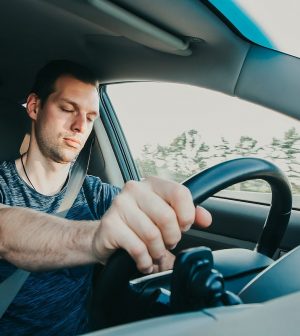
Nearly half of U.S. adults have driven while so tired it affected their ability to stay safe behind the wheel, a new survey finds, taking a risk that can be just as deadly as drunken driving.
In an American Academy of Sleep Medicine (AASM) survey, 41% of adults admitted they’ve been so drowsy while driving that it impaired their performance, including 50% of men and 33% of women.
“Drowsy driving is a serious health and safety risk, and like drunk driving, it is completely avoidable,” Dr. Andrea Matsumura, a sleep medicine physician and AASM spokesperson, said in a news release.
The AAA Foundation for Traffic Safety estimates that about 1 in 6 fatal crashes involves a drowsy driver. Adults aged 35 to 44 were the most likely to say they had trouble staying awake behind the wheel, with 47% in that age group reporting this experience.
Experts say the best defense against drowsy driving is simple: Get enough rest before hitting the road.
The AASM also recommends that adults aim for at least seven hours of sleep each night.
Other tips include:
-
Avoid driving late at night or for long stretches alone.
-
Switch drivers on road trips to prevent fatigue.
-
Pull over at a safe location and take a nap if you feel yourself drifting.
-
Ask for a ride after working a late shift or overnight job.
“If you catch yourself drifting into another lane or nodding off, it’s absolutely time to pull over and get off the road,” Matsumura added.
Some warning signs of drowsy driving, according to Matsumura, include:
-
Struggling to keep your eyes open or stay focused.
-
Drifting into another lane or onto the shoulder.
-
Missing turns or traffic signs.
-
Following too closely or “nodding off” at the wheel.
More information
The National Highway Traffic Safety Administration has more on drowsy driving.
SOURCE: American Academy of Sleep Medicine, news release, Oct. 22, 2025
Source: HealthDay
Copyright © 2026 HealthDay. All rights reserved.
Related
-
 Navigating Your Midlife Crisis: Embracing New Possibilities
A midlife crisis can open doors to personal growth...
- December 4, 2025
-
 Want A Happier Hospital? Hire More Nurses, Study Says
Adding even a few extra nurses can dramatically reduce...
- November 20, 2025
-
 Plasma Treatment Shows Promise For Menopause Symptoms Among Breast Cancer Survivors
Plasma infusions may help breast cancer survivors avoid genital...
- November 20, 2025
-
 Self-Hypnosis Can Thwart Hot Flashes
Self-hypnosis might help some women in menopause find relief...
- November 14, 2025






