- How Blue Light Impacts Your Sleep Quality
- Comparing Whey and Plant-Based Protein: Which is Best?
- How Long Does Nicotine Remain in Your System?
- The Best Time of Day to Drink Bone Broth to Maximize Health Benefits
- 8 Ways to Increase Dopamine Naturally
- 7 Best Breads for Maintaining Stable Blood Sugar
- Gelatin vs. Collagen: Which is Best for Skin, Nails, and Joints?
- The Long-Term Effects of Daily Turmeric Supplements on Liver Health
- Could Your Grocery Store Meat Be Causing Recurring UTIs?
- Are You Making This Expensive Thermostat Error This Winter?
Women Get More From Exercise Than Men
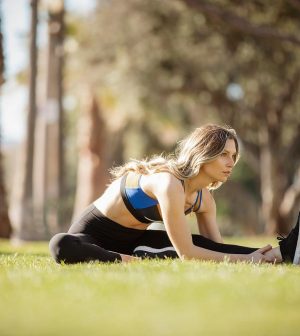
Women benefit much more from exercise than men, reaping many more gains with considerably less work, a new study reports.
With the same amount of exercise, women experience a three-fold reduction in their risk of death from heart disease compared to men, researchers reported Oct. 27 in Nature Cardiovascular Research.
These results show that “one-size-fits-all” exercise guidelines are misguided, in that they assume both sexes derive the same benefit from the same amounts of exercise, researchers concluded.
“Compared with male individuals, females derive equivalent health benefits with only half the exercise time,” wrote the research team led by Jiajin Chen, a research associate with the Xiamen University Institute of Cardiovascular Diseases in China. “The findings might have potential to encourage females to engage in physical activity.”
For the study, researchers analyzed data collected on more than 85,000 participants in UK Biobank, a long-term health research project in the United Kingdom. The people in the study wore activity trackers on their wrists.
Results showed that to reduce their risk of heart disease by 30%, men need to get 530 minutes of moderate-to-vigorous physical exercise each week.
Women only need to exercise 250 minutes a week — less than half — to achieve a comparable benefit, researchers found.
Overall, women who met the guideline target of 150 minutes of exercise weekly had a 22% lower risk of heart disease, compared to a 17% lower risk in men who met the same target.
There are some possible reasons why women might respond better to exercise, researchers said.
“Physiologically, circulating estrogen levels are much higher in females than in males, and estrogen can promote body fat loss during physical activity,” researchers wrote.
Men and women also have crucial differences in the composition of their muscle mass that might help explain why exercise provides better benefits among females, researchers noted.
These results come in the midst of a gender gap in which women are less physically active and less likely than men to properly address their heart disease risk factors, researchers said.
“This study provides strong evidence that a one-size-fits-all approach cannot and should not be used to guide physical activity recommendations for men and women,” Dr. Emily Lau, director of the Women’s Heart Health Program at Brigham and Women’s Hospital in Boston, wrote in an accompanying editorial.
“Despite this apparent female physical activity advantage, previous work has shown that women are consistently less physically active and less likely to achieve recommended activity targets, highlighting the need to more specifically tailor physical activity recommendations to women,” Lau added.
More information
The American Council on Exercise has more on physical activity benefits for women.
SOURCES: Nature, news release, Oct. 27, 2025; Nature Cardiovascular Research, Oct. 27, 2025
Source: HealthDay
Copyright © 2026 HealthDay. All rights reserved.
Related
-
 Navigating Your Midlife Crisis: Embracing New Possibilities
A midlife crisis can open doors to personal growth...
- December 4, 2025
-
 Want A Happier Hospital? Hire More Nurses, Study Says
Adding even a few extra nurses can dramatically reduce...
- November 20, 2025
-
 Plasma Treatment Shows Promise For Menopause Symptoms Among Breast Cancer Survivors
Plasma infusions may help breast cancer survivors avoid genital...
- November 20, 2025
-
 Self-Hypnosis Can Thwart Hot Flashes
Self-hypnosis might help some women in menopause find relief...
- November 14, 2025