
- How Blue Light Impacts Your Sleep Quality
- Comparing Whey and Plant-Based Protein: Which is Best?
- How Long Does Nicotine Remain in Your System?
- The Best Time of Day to Drink Bone Broth to Maximize Health Benefits
- 8 Ways to Increase Dopamine Naturally
- 7 Best Breads for Maintaining Stable Blood Sugar
- Gelatin vs. Collagen: Which is Best for Skin, Nails, and Joints?
- The Long-Term Effects of Daily Turmeric Supplements on Liver Health
- Could Your Grocery Store Meat Be Causing Recurring UTIs?
- Are You Making This Expensive Thermostat Error This Winter?
Closing Chinese Poultry Markets Stalled Bird Flu’s Spread to People

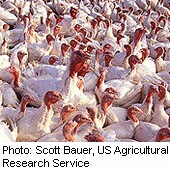
WEDNESDAY, Oct. 30Closing live poultry markets quickly and substantially reduced bird-to-human transmission of the deadly H7N9 bird flu virus in China, according to a new study.
Soon after the initial outbreak of H7N9 in the spring of 2013, 780 live poultry markets in four major Chinese cities — Shanghai, Hangzhou, Huzhou and Nanjing — were closed. The pet bird trade also was halted.
The closures reduced the average daily number of infections by 99 percent in Shanghai and Hangzhou, and by 97 percent in Huzhou and Nanjing, according to the study, which was published Oct. 30 in the journal The Lancet.
In addition, the rapid drop in bird flu infections after the live poultry markets closed enabled the researchers to estimate that the average incubation time of the virus was about three days.
These results showed that the best way to minimize the spread of the virus would be the long-term closure of live poultry markets in areas where there is high risk of disease spread, along with immediate closure of these markets in areas where the virus appears in the future, the researchers said.
“Our findings confirm that closure [of live poultry markets] is a highly effective intervention to prevent human disease and protect public health,” study lead author Dr. Benjamin Cowling, of the University of Hong Kong, said in a journal news release.
“Without this robust evidence, policymakers would struggle to justify further closures of [live poultry markets] because of the millennia-old culture of trading live birds and the potentially huge economic loss on the poultry industry in China,” Cowling said.
Some estimates put the economic loss of closing live poultry markets at more than $8 billion, according to the study.
Although closing live poultry markets in some circumstances can reduce human exposure to the H7N9 virus, this measure alone is unlikely to eliminate the threat of bird-to-human transmission, Guillaume Fournie and Dirk Pfeiffer, of the Royal Veterinary College in London, wrote in an accompanying journal editorial.
“The focus should move beyond detection of human cases and emergency response toward prevention at the infection source,” they wrote.
More information
The U.S. Centers for Disease Control and Prevention has more about H7N9 bird flu.
Source: HealthDay
Copyright © 2026 HealthDay. All rights reserved.
Related
-
 Navigating Your Midlife Crisis: Embracing New Possibilities
A midlife crisis can open doors to personal growth...
- December 4, 2025
-
 Want A Happier Hospital? Hire More Nurses, Study Says
Adding even a few extra nurses can dramatically reduce...
- November 20, 2025
-
 Plasma Treatment Shows Promise For Menopause Symptoms Among Breast Cancer Survivors
Plasma infusions may help breast cancer survivors avoid genital...
- November 20, 2025
-
 Self-Hypnosis Can Thwart Hot Flashes
Self-hypnosis might help some women in menopause find relief...
- November 14, 2025






