
- How Blue Light Impacts Your Sleep Quality
- Comparing Whey and Plant-Based Protein: Which is Best?
- How Long Does Nicotine Remain in Your System?
- The Best Time of Day to Drink Bone Broth to Maximize Health Benefits
- 8 Ways to Increase Dopamine Naturally
- 7 Best Breads for Maintaining Stable Blood Sugar
- Gelatin vs. Collagen: Which is Best for Skin, Nails, and Joints?
- The Long-Term Effects of Daily Turmeric Supplements on Liver Health
- Could Your Grocery Store Meat Be Causing Recurring UTIs?
- Are You Making This Expensive Thermostat Error This Winter?
Computer Program Spots 21 Distinct Facial Expressions

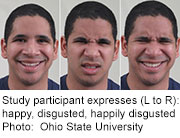
A new computer model that can recognize 21 distinct facial expressions more than triples the previous number of documented expressions for different emotions, researchers report.
The new program can even pinpoint expressions for complex or seemingly contradictory emotions such as “sadly angry” or “happily disgusted,” according to the Ohio State University researchers.
They said their achievement will help scientists map emotion in the brain with greater accuracy than before, and could help in the diagnosis and treatment of conditions such as autism and post-traumatic stress disorder.
Until now, limits on reading facial expressions restricted scientists to studying six basic emotions: happy, sad, fearful, angry, disgusted and surprised.
“We’ve gone beyond facial expressions for simple emotions like happy or sad,” Aleix Martinez, a cognitive scientist and associate professor of electrical and computer engineering, said in a university news release. “We found a strong consistency in how people move their facial muscles to express 21 categories of emotions.”
“That is simply stunning,” he said. “That tells us that these 21 emotions are expressed in the same way by nearly everyone, at least in our culture.”
The researchers created the computer program by taking 5,000 photos of 130 women and 100 men making faces in response to statements such as, “You just got some great unexpected news” (happily surprised), or, “You smell a bad odor” (disgusted).
Analysis of the facial muscles in the photos enabled the team to identify expressions linked to 21 emotions, according to the study, which was published in this week’s issue of the journal Proceedings of the National Academy of Sciences.
More information
The American Academy of Family Physicians explains how emotions affect your health.
Source: HealthDay
Copyright © 2026 HealthDay. All rights reserved.
Related
-
 Navigating Your Midlife Crisis: Embracing New Possibilities
A midlife crisis can open doors to personal growth...
- December 4, 2025
-
 Want A Happier Hospital? Hire More Nurses, Study Says
Adding even a few extra nurses can dramatically reduce...
- November 20, 2025
-
 Plasma Treatment Shows Promise For Menopause Symptoms Among Breast Cancer Survivors
Plasma infusions may help breast cancer survivors avoid genital...
- November 20, 2025
-
 Self-Hypnosis Can Thwart Hot Flashes
Self-hypnosis might help some women in menopause find relief...
- November 14, 2025






