
- How Blue Light Impacts Your Sleep Quality
- Comparing Whey and Plant-Based Protein: Which is Best?
- How Long Does Nicotine Remain in Your System?
- The Best Time of Day to Drink Bone Broth to Maximize Health Benefits
- 8 Ways to Increase Dopamine Naturally
- 7 Best Breads for Maintaining Stable Blood Sugar
- Gelatin vs. Collagen: Which is Best for Skin, Nails, and Joints?
- The Long-Term Effects of Daily Turmeric Supplements on Liver Health
- Could Your Grocery Store Meat Be Causing Recurring UTIs?
- Are You Making This Expensive Thermostat Error This Winter?
Autism Affects Motor Skills Too

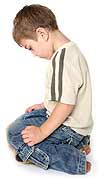
Autism affects the development of motor skills in infants and toddlers, and the more severe their disorder, the slower their progress in being able to do things such as grasp objects and move around.
That’s the finding of a study that assessed more than 150 children between the ages of 12 and 33 months. One hundred and ten youngsters in the study had autism, and 49 children didn’t have the disorder. The children with autism were nearly a year behind typical children in fine motor skills, such as holding a spoon or a small toy.
The youngsters with autism were also about six months behind in gross motor skills, such as running and jumping, according to the study published in the April issue of the journal Adapted Physical Activity Quarterly.
The lag in motor skills development among the children with autism was not linked to intellectual ability, noted study author Megan MacDonald, an assistant professor in the College of Public Health and Human Sciences at Oregon State University.
“It’s not that big a deal if we’re talking about older kids, but for kids between 1 and 3 years old, those are substantial deficits, almost one-third of their life,” she said in a university news release. “At that age, they’re like little sponges — we can teach them motor skills,” she added.
Plus, early identification of motor skills problems in autistic children “gives us more time to help children catch up to their peers in regards to motor skills,” MacDonald said.
The findings show that motor skills development should be included in treatment programs for autistic children, said MacDonald, an expert on autistic children’s movement skills. Treatment plans for autistic children typically focus on social communication.
Parents of children with autism should consider adaptive physical education programs, which are tailored to a child’s abilities and needs, MacDonald said.
More information
The U.S. National Institute of Neurological Disorders and Stroke has more about autism.
Source: HealthDay
Copyright © 2026 HealthDay. All rights reserved.
Related
-
 Navigating Your Midlife Crisis: Embracing New Possibilities
A midlife crisis can open doors to personal growth...
- December 4, 2025
-
 Want A Happier Hospital? Hire More Nurses, Study Says
Adding even a few extra nurses can dramatically reduce...
- November 20, 2025
-
 Plasma Treatment Shows Promise For Menopause Symptoms Among Breast Cancer Survivors
Plasma infusions may help breast cancer survivors avoid genital...
- November 20, 2025
-
 Self-Hypnosis Can Thwart Hot Flashes
Self-hypnosis might help some women in menopause find relief...
- November 14, 2025






