
- How Blue Light Impacts Your Sleep Quality
- Comparing Whey and Plant-Based Protein: Which is Best?
- How Long Does Nicotine Remain in Your System?
- The Best Time of Day to Drink Bone Broth to Maximize Health Benefits
- 8 Ways to Increase Dopamine Naturally
- 7 Best Breads for Maintaining Stable Blood Sugar
- Gelatin vs. Collagen: Which is Best for Skin, Nails, and Joints?
- The Long-Term Effects of Daily Turmeric Supplements on Liver Health
- Could Your Grocery Store Meat Be Causing Recurring UTIs?
- Are You Making This Expensive Thermostat Error This Winter?
With Kids In Car, Parents Still Likely to Use Cellphones

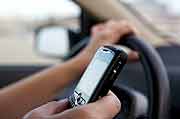
Parents driving with their children in the car are just as likely to use cellphones as other drivers, a new study finds.
Researchers interviewed 570 parents of children aged 1 to 12 who were treated at two hospital emergency rooms in Michigan. About 90 percent of parent drivers admitted to distracted driving.
Two-thirds of the parents said they had used cellphones while driving with their child, and 15 percent said they had texted while driving with their child.
Many confessed to other types of distracted driving, and giving food to a child while driving was even more common than cellphone use, according to the study released online on April 30 in the journal Academic Pediatrics.
“This just highlights the need to consider multiple sources of driver distraction when kids are passengers. Giving food to a child or picking up a toy for a child not only requires a driver to take their hands off the wheel but also take their eyes off the road,” study author Dr. Michelle Macy, an emergency medicine physician at the University of Michigan’s C.S. Mott Children’s Hospital, said in a university news release.
Distracted driving caused about one in six fatal traffic crashes in the United States in 2008, and that percentage has likely increased, according to Macy.
She and her colleagues also found that white parents and those with higher levels of education were more likely to admit to distracted driving due to the use of cellphones or navigation systems.
“If this finding is a result of greater access to technology among more highly educated and non-Hispanic white parents, we can expect the problem of technology-based distractions to expand because national rates of cellphone ownership in the U.S. have climbed above 90 percent,” Macy said.
The researchers also found that parents with children ages 2 to 8 were more likely to report distracted driving when their children were in the car, compared with parents of children who were 1 year old.
The study findings also suggest that parents may be setting a poor example for their children, Macy said.
“Efforts to improve child passenger safety have often focused on increased and proper use of restraining seats. But this study shows that reducing distractions and discouraging unsafe behaviors could prevent crashes,” she noted.
More information
The U.S. National Highway Traffic Safety Administration has more about distracted driving.
Source: HealthDay
Copyright © 2026 HealthDay. All rights reserved.
Related
-
 Navigating Your Midlife Crisis: Embracing New Possibilities
A midlife crisis can open doors to personal growth...
- December 4, 2025
-
 Want A Happier Hospital? Hire More Nurses, Study Says
Adding even a few extra nurses can dramatically reduce...
- November 20, 2025
-
 Plasma Treatment Shows Promise For Menopause Symptoms Among Breast Cancer Survivors
Plasma infusions may help breast cancer survivors avoid genital...
- November 20, 2025
-
 Self-Hypnosis Can Thwart Hot Flashes
Self-hypnosis might help some women in menopause find relief...
- November 14, 2025