
- How Blue Light Impacts Your Sleep Quality
- Comparing Whey and Plant-Based Protein: Which is Best?
- How Long Does Nicotine Remain in Your System?
- The Best Time of Day to Drink Bone Broth to Maximize Health Benefits
- 8 Ways to Increase Dopamine Naturally
- 7 Best Breads for Maintaining Stable Blood Sugar
- Gelatin vs. Collagen: Which is Best for Skin, Nails, and Joints?
- The Long-Term Effects of Daily Turmeric Supplements on Liver Health
- Could Your Grocery Store Meat Be Causing Recurring UTIs?
- Are You Making This Expensive Thermostat Error This Winter?
Genes Tied to Curvature of Spine in Kids
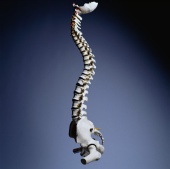
Scientists say they’ve identified two rare genetic mutations that greatly increase a child’s risk for severe scoliosis — curvature of the spine.
Children with these mutations have a quadrupled risk of developing s-shaped curves in their spines that are serious enough to require surgery, according to the team at Washington University School of Medicine in St. Louis.
“We’ve had a difficult time finding ways to predict who will develop severe scoliosis, and these newly identified mutations have the potential to be very helpful,” study senior author Dr. Christina Gurnett, an associate professor of neurology, said in a university news release.
The mutations occur in genes called fibrillin-1 and fibrillin-2. Drugs that block a major growth pathway controlled by these genes are currently being tested in clinical trials. If the same pathway is involved in scoliosis, these drugs may help prevent scoliosis in some children with the mutations, the researchers explained.
About one in 10,000 children has such severe scoliosis that surgery is required to correct the spinal curvature.
“These children often don’t have any curvature of the spine early in adolescence, but then they go through a growth spurt, and that’s when the curve appears,” Gurnett said. “Others have tried to predict severe disease using gender, age of onset and type of spine curve but haven’t been very successful.”
For the study, the researchers analyzed the DNA of hundreds of scoliosis patients and people without the condition. The findings were published online recently in the journal Human Molecular Genetics.
“We want to create a genetic testing panel that we can use to more accurately predict who will need treatment,” Gurnett said. “If we can develop effective treatments and apply them early enough, we might one day be able to prevent the need for surgeries.”
More information
The U.S. National Institute of Arthritis and Musculoskeletal and Skin Diseases has more about scoliosis.
Source: HealthDay
Copyright © 2026 HealthDay. All rights reserved.
Related
-
 Navigating Your Midlife Crisis: Embracing New Possibilities
A midlife crisis can open doors to personal growth...
- December 4, 2025
-
 Want A Happier Hospital? Hire More Nurses, Study Says
Adding even a few extra nurses can dramatically reduce...
- November 20, 2025
-
 Plasma Treatment Shows Promise For Menopause Symptoms Among Breast Cancer Survivors
Plasma infusions may help breast cancer survivors avoid genital...
- November 20, 2025
-
 Self-Hypnosis Can Thwart Hot Flashes
Self-hypnosis might help some women in menopause find relief...
- November 14, 2025






