
- How Blue Light Impacts Your Sleep Quality
- Comparing Whey and Plant-Based Protein: Which is Best?
- How Long Does Nicotine Remain in Your System?
- The Best Time of Day to Drink Bone Broth to Maximize Health Benefits
- 8 Ways to Increase Dopamine Naturally
- 7 Best Breads for Maintaining Stable Blood Sugar
- Gelatin vs. Collagen: Which is Best for Skin, Nails, and Joints?
- The Long-Term Effects of Daily Turmeric Supplements on Liver Health
- Could Your Grocery Store Meat Be Causing Recurring UTIs?
- Are You Making This Expensive Thermostat Error This Winter?
200-Year-Old Whale May Give Clues to Human Longevity

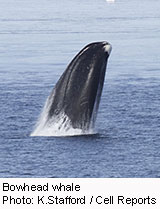
A whale that lives more than 200 years with no signs of age-related disease may give scientists new insight on how people can live longer, healthier lives, a new study finds.
For the first time, British researchers have completed the genetic map (“genome”) of a large whale — the bowhead whale. In doing so, they spotted key differences between the genome of the bowhead whale and other mammals.
Changes in the bowhead’s genes tied to aging, cell division, cancer and DNA repair may all play a role in why the whales live so long, according to the study published Jan. 6 in Cell Reports.
“Our understanding of species’ differences in longevity is very poor, and thus our findings provide novel candidate genes for future studies,” study senior author Dr. Joao Pedro de Magalhaes, of the University of Liverpool, said in a journal news release.
“My view is that species evolved different ‘tricks’ to have a longer lifespan, and by discovering the ‘tricks’ used by the bowhead we may be able to apply those findings to humans in order to fight age-related diseases,” he added.
The researchers pointed out that large whales like the bowhead have more than 1,000 times more cells than people, and yet they appear to be resistant to cancer. This suggests that these whales may have a natural defense mechanism that suppresses cancer more effectively than other mammals, they said.
Looking ahead, the study authors hope to breed mice with certain bowhead whale genes to determine which are important for longevity and resistance to disease.
The whale genome may also help identify certain adaptations related to the large mammal’s size, such as a much lower metabolic rate.
More information
The U.S. National Institute on Aging has more about longevity and healthy aging.
Source: HealthDay
Copyright © 2026 HealthDay. All rights reserved.
Related
-
 Navigating Your Midlife Crisis: Embracing New Possibilities
A midlife crisis can open doors to personal growth...
- December 4, 2025
-
 Want A Happier Hospital? Hire More Nurses, Study Says
Adding even a few extra nurses can dramatically reduce...
- November 20, 2025
-
 Plasma Treatment Shows Promise For Menopause Symptoms Among Breast Cancer Survivors
Plasma infusions may help breast cancer survivors avoid genital...
- November 20, 2025
-
 Self-Hypnosis Can Thwart Hot Flashes
Self-hypnosis might help some women in menopause find relief...
- November 14, 2025






