
- How Blue Light Impacts Your Sleep Quality
- Comparing Whey and Plant-Based Protein: Which is Best?
- How Long Does Nicotine Remain in Your System?
- The Best Time of Day to Drink Bone Broth to Maximize Health Benefits
- 8 Ways to Increase Dopamine Naturally
- 7 Best Breads for Maintaining Stable Blood Sugar
- Gelatin vs. Collagen: Which is Best for Skin, Nails, and Joints?
- The Long-Term Effects of Daily Turmeric Supplements on Liver Health
- Could Your Grocery Store Meat Be Causing Recurring UTIs?
- Are You Making This Expensive Thermostat Error This Winter?
Gene Therapy Shows Promise for Inherited Eye Disease

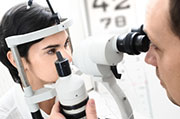
A new study finds that gene therapy quickly improves eyesight for patients who’ve lost their vision from an inherited condition called Leber congenital amaurosis (LCA).
But the improvements aren’t permanent: Researchers said the gains began to diminish after one to three years.
“Gene therapy for LCA demonstrated we could improve vision in previously untreatable and incurable retinal conditions,” study leader Dr. Samuel Jacobson, of the University of Pennsylvania’s Scheie Eye Institute, said in a U.S. National Eye Institute release.
“Even though the current version of the therapy doesn’t appear to be the permanent treatment we were hoping for, the gain in knowledge … is an opportunity to improve the therapy so that the restored vision can be sustained for longer durations in patients,” Jacobson added.
Scientists started the research in 2007, looking at 15 people with the eye condition who received injections of a virus that carried certain genes.
“Within days of the injections, some patients reported increases in their ability to see dim lights they had never seen before,” Jacobson said. “It was remarkable for us to get this feedback that things were indeed changing positively.”
Dr. Paul Sieving, director of the National Eye Institute, said that six years of data shows that a gene-therapy approach is safe and successfully improves vision in people with LCA.
“As with any application of a novel therapy, it now needs to be fine-tuned. More research is needed to understand the underlying biology and how we can preserve or restore photoreceptors for a lifetime,” he said.
The study was published online May 3 in the New England Journal of Medicine.
More information
For more about Leber congenital amaurosis, try the U.S. National Library of Medicine.
Source: HealthDay
Copyright © 2026 HealthDay. All rights reserved.
Related
-
 Navigating Your Midlife Crisis: Embracing New Possibilities
A midlife crisis can open doors to personal growth...
- December 4, 2025
-
 Want A Happier Hospital? Hire More Nurses, Study Says
Adding even a few extra nurses can dramatically reduce...
- November 20, 2025
-
 Plasma Treatment Shows Promise For Menopause Symptoms Among Breast Cancer Survivors
Plasma infusions may help breast cancer survivors avoid genital...
- November 20, 2025
-
 Self-Hypnosis Can Thwart Hot Flashes
Self-hypnosis might help some women in menopause find relief...
- November 14, 2025






