
- How Blue Light Impacts Your Sleep Quality
- Comparing Whey and Plant-Based Protein: Which is Best?
- How Long Does Nicotine Remain in Your System?
- The Best Time of Day to Drink Bone Broth to Maximize Health Benefits
- 8 Ways to Increase Dopamine Naturally
- 7 Best Breads for Maintaining Stable Blood Sugar
- Gelatin vs. Collagen: Which is Best for Skin, Nails, and Joints?
- The Long-Term Effects of Daily Turmeric Supplements on Liver Health
- Could Your Grocery Store Meat Be Causing Recurring UTIs?
- Are You Making This Expensive Thermostat Error This Winter?
Preemie Girls Feed Sooner Than Boys, Study Finds

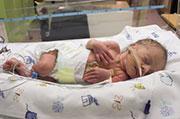
New research supports the theory that girls born prematurely fare better than preemie boys in the first weeks of life.
The study of 2,700 premature infants found that females were able to breast-feed or bottle-feed one day earlier than males. This is an important measurement because preemies need feeding tubes if they can’t suck, swallow and breathe at the same time. Infants can’t go home until they can eat without a feeding tube.
On average, premature infants learned to eat independently at the equivalent of a gestational age of 36 weeks and four days, the researchers said.
But babies born by C-section tended to take longer to learn to feed by mouth than those born vaginally. And babies born with severe complications also experienced feeding delays, the study found.
“This study gives us insight into the factors that influence when an infant is likely to eat independently without complications,” said senior study author Dr. Jonathan Muraskas, co-medical director of the neonatal intensive care unit at Loyola University Health System in Maywood, Ill.
The infants evaluated were born before 37 weeks of pregnancy and treated at a neonatal intensive care unit between 1978 and 2013.
The findings were published in the Journal of Neonatal-Perinatal Medicine.
“This information will allow parents and the health care team to better plan for when the infant will go home from the hospital,” said Muraskas in a Loyola news release.
The majority of preterm newborns can be safely discharged three to four weeks before their due date, the researchers concluded.
More information
For more about premature infants, see the U.S. National Library of Medicine.
Source: HealthDay
Copyright © 2026 HealthDay. All rights reserved.
Related
-
 Navigating Your Midlife Crisis: Embracing New Possibilities
A midlife crisis can open doors to personal growth...
- December 4, 2025
-
 Want A Happier Hospital? Hire More Nurses, Study Says
Adding even a few extra nurses can dramatically reduce...
- November 20, 2025
-
 Plasma Treatment Shows Promise For Menopause Symptoms Among Breast Cancer Survivors
Plasma infusions may help breast cancer survivors avoid genital...
- November 20, 2025
-
 Self-Hypnosis Can Thwart Hot Flashes
Self-hypnosis might help some women in menopause find relief...
- November 14, 2025






