
- How Blue Light Impacts Your Sleep Quality
- Comparing Whey and Plant-Based Protein: Which is Best?
- How Long Does Nicotine Remain in Your System?
- The Best Time of Day to Drink Bone Broth to Maximize Health Benefits
- 8 Ways to Increase Dopamine Naturally
- 7 Best Breads for Maintaining Stable Blood Sugar
- Gelatin vs. Collagen: Which is Best for Skin, Nails, and Joints?
- The Long-Term Effects of Daily Turmeric Supplements on Liver Health
- Could Your Grocery Store Meat Be Causing Recurring UTIs?
- Are You Making This Expensive Thermostat Error This Winter?
Local Anesthesia May Be Best for Infants During Surgery

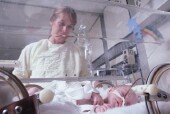
New research suggests infants may recover better after some kinds of surgery if they receive local anesthesia — which only numbs part of the body — instead of being “knocked out” completely with general anesthesia.
Young patients who had local anesthesia were less likely to suffer from disrupted breathing following hernia surgery, the study found.
“Our research provides the strongest evidence to date on how babies should have anesthesia for hernia repair, the most common procedure among infants,” said lead author Dr. Andrew Davidson, an associate professor at Royal Children’s Hospital in Melbourne, Australia.
“We found that spinal [local] anesthesia is safer than general anesthesia,” Davidson explained in a news release from the American Society of Anesthesiologists.
There’s long been uncertainty about the use of general anesthesia in infants and toddlers. Some specialists worry that it could cause long-term problems. Local anesthesia doesn’t put a patient to sleep, but instead numbs specific parts of the body.
The new study looked at rates of breathing problems in 722 infants after they had been given anesthesia. The results suggest local anesthesia causes fewer breathing problems in the 30 minutes after surgery.
Dr. Geoff Frawley, physician anesthesiologist and a clinical associate professor at Royal Children’s Hospital, looked at the medical records of 339 patients to see how they fared under local anesthesia administered through the spine.
“Every year, millions of children require surgery in their first year of life,” Frawley said in the news release. “We aimed to establish which factors are associated with better outcomes when infant spinal anesthesia is used. We found that there is a steep learning curve among anesthesia providers for infant spinal anesthesia, but learning the technique could have a far-reaching impact for infants undergoing surgery.”
The study was published in the May 14 online edition of the journal Anesthesiology.
More information
The U.S. Food and Drug Administration has more on anesthesia for children.
Source: HealthDay
Copyright © 2026 HealthDay. All rights reserved.
Related
-
 Navigating Your Midlife Crisis: Embracing New Possibilities
A midlife crisis can open doors to personal growth...
- December 4, 2025
-
 Want A Happier Hospital? Hire More Nurses, Study Says
Adding even a few extra nurses can dramatically reduce...
- November 20, 2025
-
 Plasma Treatment Shows Promise For Menopause Symptoms Among Breast Cancer Survivors
Plasma infusions may help breast cancer survivors avoid genital...
- November 20, 2025
-
 Self-Hypnosis Can Thwart Hot Flashes
Self-hypnosis might help some women in menopause find relief...
- November 14, 2025