
- How Blue Light Impacts Your Sleep Quality
- Comparing Whey and Plant-Based Protein: Which is Best?
- How Long Does Nicotine Remain in Your System?
- The Best Time of Day to Drink Bone Broth to Maximize Health Benefits
- 8 Ways to Increase Dopamine Naturally
- 7 Best Breads for Maintaining Stable Blood Sugar
- Gelatin vs. Collagen: Which is Best for Skin, Nails, and Joints?
- The Long-Term Effects of Daily Turmeric Supplements on Liver Health
- Could Your Grocery Store Meat Be Causing Recurring UTIs?
- Are You Making This Expensive Thermostat Error This Winter?
Safety Tips for Water Skiing and Wake Boarding

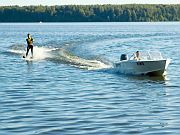
Wake boarding and water skiing are great ways to have fun and be physically active during the summer months, but certain safety precautions need to be followed to prevent serious injuries, experts say.
Every year in the United States, thousands of people are hurt in water skiing and wake boarding accidents, according to Nationwide Children’s Hospital, in Columbus, Ohio. Wake boarding is similar to water skiing, but is done on a single board instead of two skis.
Most water skiing injuries involve sprains and strains in the legs. Wake boarders often get cuts and injuries to their head and face. Wake boarding is more likely than water skiing to result in a traumatic brain injury, cautioned experts at Nationwide Children’s.
There are ways water skiers and wake boarders can reduce their risk for injury before they head out to the water, including:
- Learn how to get out of the water and how to use a tow rope safely.
- Review basic hand signals with a spotter.
- Make sure the boat operator is licensed and experienced with both the boat and the body of water.
- Always wear a U.S. Coast Guard approved life jacket.
- Wake boarders should wear an approved safety helmet.
People engaging in water sports should also consider these factors to ensure their safety:
- Water ski and wake board during the day – not at night.
- Never use drugs or alcohol while driving a boat, water skiing or wake boarding.
- Always have a spotter sitting at the back of the boat to watch the skier or wake boarder and communicate with the person driving the boat.
- Let go of the tow rope immediately after a fall.
- Do not climb into a boat from the water unless the propeller is stopped.
- Quit water skiing or wake boarding at the first sign of lighting or thunder.
- Never water ski or wake board in restricted areas.
More information
The California Division of Boating and Waterways provides more information on water sport safety.
Source: HealthDay
Copyright © 2026 HealthDay. All rights reserved.
Related
-
 Navigating Your Midlife Crisis: Embracing New Possibilities
A midlife crisis can open doors to personal growth...
- December 4, 2025
-
 Want A Happier Hospital? Hire More Nurses, Study Says
Adding even a few extra nurses can dramatically reduce...
- November 20, 2025
-
 Plasma Treatment Shows Promise For Menopause Symptoms Among Breast Cancer Survivors
Plasma infusions may help breast cancer survivors avoid genital...
- November 20, 2025
-
 Self-Hypnosis Can Thwart Hot Flashes
Self-hypnosis might help some women in menopause find relief...
- November 14, 2025






