
- How Blue Light Impacts Your Sleep Quality
- Comparing Whey and Plant-Based Protein: Which is Best?
- How Long Does Nicotine Remain in Your System?
- The Best Time of Day to Drink Bone Broth to Maximize Health Benefits
- 8 Ways to Increase Dopamine Naturally
- 7 Best Breads for Maintaining Stable Blood Sugar
- Gelatin vs. Collagen: Which is Best for Skin, Nails, and Joints?
- The Long-Term Effects of Daily Turmeric Supplements on Liver Health
- Could Your Grocery Store Meat Be Causing Recurring UTIs?
- Are You Making This Expensive Thermostat Error This Winter?
Inhalable Ebola Vaccine Works in Monkeys
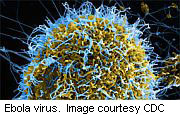
An inhalable Ebola vaccine protected monkeys against the deadly virus, a new study shows.
Research suggests that the linings of the airways may be an important point of entry for the Ebola virus into the body. This was the first test of a inhalable Ebola vaccine, the researchers said.
“A needle-free, inhalable vaccine against Ebola presents certain advantages. Immunization will not require trained medical personnel,” study author Michelle Meyer said in a University of Texas Medical Branch (UTMB) at Galveston news release. Meyer is a postdoctoral fellow in its pathology department.
She and her colleagues found that the inhalable vaccine protected rhesus macaque monkeys against severe illness and death when they were exposed to the Ebola virus.
The findings were published July 13 in the Journal of Clinical Investigation.
“This study demonstrates successful aerosol vaccination against a viral hemorrhagic fever for the first time,” study senior author and virologist Alex Bukreyev, a professor at UTMB, said in the news release.
“A single-dose aerosol vaccine would enable both prevention and containment of Ebola infections, in a natural outbreak setting where health care infrastructure is lacking or during bioterrorism and biological warfare scenarios,” he added.
The researchers will apply for approval to conduct human clinical trials of the inhalable Ebola vaccine.
More information
The U.S. Centers for Disease Control and Prevention has more about Ebola.
Source: HealthDay
Copyright © 2026 HealthDay. All rights reserved.
Related
-
 Navigating Your Midlife Crisis: Embracing New Possibilities
A midlife crisis can open doors to personal growth...
- December 4, 2025
-
 Want A Happier Hospital? Hire More Nurses, Study Says
Adding even a few extra nurses can dramatically reduce...
- November 20, 2025
-
 Plasma Treatment Shows Promise For Menopause Symptoms Among Breast Cancer Survivors
Plasma infusions may help breast cancer survivors avoid genital...
- November 20, 2025
-
 Self-Hypnosis Can Thwart Hot Flashes
Self-hypnosis might help some women in menopause find relief...
- November 14, 2025






