
- How Blue Light Impacts Your Sleep Quality
- Comparing Whey and Plant-Based Protein: Which is Best?
- How Long Does Nicotine Remain in Your System?
- The Best Time of Day to Drink Bone Broth to Maximize Health Benefits
- 8 Ways to Increase Dopamine Naturally
- 7 Best Breads for Maintaining Stable Blood Sugar
- Gelatin vs. Collagen: Which is Best for Skin, Nails, and Joints?
- The Long-Term Effects of Daily Turmeric Supplements on Liver Health
- Could Your Grocery Store Meat Be Causing Recurring UTIs?
- Are You Making This Expensive Thermostat Error This Winter?
Will You Need Knee Replacement? Maybe Your Hand Can Tell You
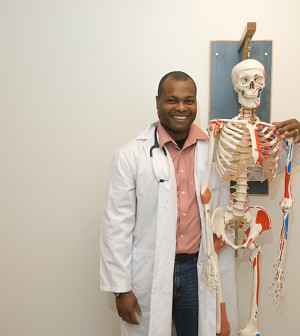

The closer in length your ring and index fingers are, the greater your risk of developing severe knee osteoarthritis that requires total knee replacement, a new study claims.
Researchers examined the hands of more than 14,500 middle-aged and older people in Australia, and followed them for an average of more than 10 years. During that time, 580 people had total knee replacements and about 500 had total hip replacements.
Having ring and index fingers that were closer in length was associated with a higher risk of requiring total knee replacement due to osteoarthritis, according to the study, which was published online March 4 in the journal Rheumatology. The association was stronger with fingers on the right hand.
Osteoarthritis, which is related to normal wear and tear of joints, is the most common type of arthritis.
The study did not find any evidence of a link between the lengths of ring and index fingers and the risk of total hip replacement.
Previous studies have suggested that there may be an association between the ratio of ring and index fingers and athletic ability, study author Dr. Yuanyuan Wang, of the School of Public Health and Preventive Medicine at Monash University, in Melbourne, Australia, said in a journal news release.
The researchers couldn’t fully explain the new findings. It might be that participants with lower index- to ring-finger ratios performed higher-intensity physical activity, thus putting their knees at more risk. It also might be that knee arthritis is more vulnerable after injury than hip arthritis, Wang said.
The findings, however, “may also reflect hormonal influences on the growth of bone, cartilage and soft tissue, which warrants further investigation,” he added.
The study only found an association between finger length and the risk of needing total knee replacement. It did not show cause-and-effect.
More information
The U.S. National Institute of Arthritis and Musculoskeletal and Skin Diseases has more about osteoarthritis.
Source: HealthDay
Copyright © 2026 HealthDay. All rights reserved.
Related
-
 Navigating Your Midlife Crisis: Embracing New Possibilities
A midlife crisis can open doors to personal growth...
- December 4, 2025
-
 Want A Happier Hospital? Hire More Nurses, Study Says
Adding even a few extra nurses can dramatically reduce...
- November 20, 2025
-
 Plasma Treatment Shows Promise For Menopause Symptoms Among Breast Cancer Survivors
Plasma infusions may help breast cancer survivors avoid genital...
- November 20, 2025
-
 Self-Hypnosis Can Thwart Hot Flashes
Self-hypnosis might help some women in menopause find relief...
- November 14, 2025






