- How Blue Light Impacts Your Sleep Quality
- Comparing Whey and Plant-Based Protein: Which is Best?
- How Long Does Nicotine Remain in Your System?
- The Best Time of Day to Drink Bone Broth to Maximize Health Benefits
- 8 Ways to Increase Dopamine Naturally
- 7 Best Breads for Maintaining Stable Blood Sugar
- Gelatin vs. Collagen: Which is Best for Skin, Nails, and Joints?
- The Long-Term Effects of Daily Turmeric Supplements on Liver Health
- Could Your Grocery Store Meat Be Causing Recurring UTIs?
- Are You Making This Expensive Thermostat Error This Winter?
Putting Baby to Sleep on Animal Fur May Lower Asthma Risk: Study

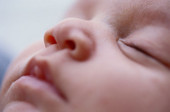
Infants who sleep on animal fur may be less likely to develop asthma later in childhood, new research suggests.
The study included more than 2,400 healthy city-dwelling newborns in Germany who were followed until age 10. Of those children, 55 percent slept on animal skin in their first three months of life.
Compared to other youngsters, those who slept on animal skin in infancy were 79 percent less likely to have asthma at age 6, and 41 percent less likely to have asthma by age 10, the investigators found.
The study was presented Sunday at the European Respiratory Society meeting in Munich. The data and conclusions of research presented at medical meetings should be viewed as preliminary until published in a peer-reviewed journal.
“Previous studies have suggested that microbes found in rural settings can protect from asthma. An animal skin might also be a reservoir for various kinds of microbes, following similar mechanisms as has been observed in rural environments,” Christina Tischer, from the Helmholtz Zentrum Munchen Research Center in Germany, said in a European Lung Foundation news release.
“Our findings have confirmed that it is crucial to study further the actual microbial environment within the animal fur to confirm these associations,” she added.
While the study found an association between exposure to animal skins and fur during infancy and decreased risk of developing asthma, it did not prove a cause-and-effect relationship.
More information
The U.S. National Library of Medicine has more about asthma.
Source: HealthDay
Copyright © 2026 HealthDay. All rights reserved.
Related
-
 Navigating Your Midlife Crisis: Embracing New Possibilities
A midlife crisis can open doors to personal growth...
- December 4, 2025
-
 Want A Happier Hospital? Hire More Nurses, Study Says
Adding even a few extra nurses can dramatically reduce...
- November 20, 2025
-
 Plasma Treatment Shows Promise For Menopause Symptoms Among Breast Cancer Survivors
Plasma infusions may help breast cancer survivors avoid genital...
- November 20, 2025
-
 Self-Hypnosis Can Thwart Hot Flashes
Self-hypnosis might help some women in menopause find relief...
- November 14, 2025