
- How Blue Light Impacts Your Sleep Quality
- Comparing Whey and Plant-Based Protein: Which is Best?
- How Long Does Nicotine Remain in Your System?
- The Best Time of Day to Drink Bone Broth to Maximize Health Benefits
- 8 Ways to Increase Dopamine Naturally
- 7 Best Breads for Maintaining Stable Blood Sugar
- Gelatin vs. Collagen: Which is Best for Skin, Nails, and Joints?
- The Long-Term Effects of Daily Turmeric Supplements on Liver Health
- Could Your Grocery Store Meat Be Causing Recurring UTIs?
- Are You Making This Expensive Thermostat Error This Winter?
Scientists Finally Figure Out Why Pee Is Yellow
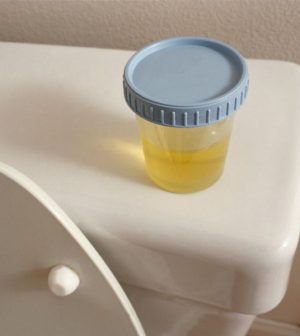
Golden news for a new year: Scientists now know why urine is yellow.
It’s only taken 100 years, but researchers say they’ve pinpointed the enzyme in urine behind its buttery hue.
“This enzyme discovery finally unravels the mystery behind urine’s yellow color,” said study lead author Brantley Hall. He’s an assistant professor in the University of Maryland’s department of cell biology and molecular genetics.
“It’s remarkable that an everyday biological phenomenon went unexplained for so long, and our team is excited to be able to explain it,” he said in a university news release.
It all starts with the degradation of the body’s trillions of red blood cells once they end their average six-month life span.
Scientists have long understood that bilirubin, a bright orange pigment, is a byproduct of this cellular change. Bilirubin is secreted into the gut, where it lies ready for excretion.
While bilirubin waits in this digestive way station, the gut’s microbes get busy breaking it down into other molecules.
“Gut microbes encode the enzyme bilirubin reductase that converts bilirubin into a colorless byproduct called urobilinogen,” Hall explained. “Urobilinogen then spontaneously degrades into a molecule called urobilin.”
It is this final molecule, urobilin, “which is responsible for the yellow color we are all familiar with,” Hall’s team said. They published their findings Jan. 3 in the journal Nature Microbiology.
Besides answering a longstanding physiological puzzle, the identification of bilirubin reductase and urobilinogen could further the understanding of various illnesses.
For example, Hall’s team found that bilirubin reductase is actually missing from newborns, as well as people with inflammatory bowel disease. So, bilirubin reductase deficiency might contribute to infant jaundice and in the formation of gallstones, they hypothesized.
“Now that we’ve identified this enzyme, we can start investigating how the bacteria in our gut impact circulating bilirubin levels and related health conditions like jaundice,” said study co-author Xiaofang Jiang. “This discovery lays the foundation for understanding the gut-liver axis.”
More information
Find out more about jaundice at the Cleveland Clinic.
SOURCE: University of Maryland, news release, Jan. 3, 2024
Source: HealthDay
Copyright © 2026 HealthDay. All rights reserved.
Related
-
 Navigating Your Midlife Crisis: Embracing New Possibilities
A midlife crisis can open doors to personal growth...
- December 4, 2025
-
 Want A Happier Hospital? Hire More Nurses, Study Says
Adding even a few extra nurses can dramatically reduce...
- November 20, 2025
-
 Plasma Treatment Shows Promise For Menopause Symptoms Among Breast Cancer Survivors
Plasma infusions may help breast cancer survivors avoid genital...
- November 20, 2025
-
 Self-Hypnosis Can Thwart Hot Flashes
Self-hypnosis might help some women in menopause find relief...
- November 14, 2025






