
- How Blue Light Impacts Your Sleep Quality
- Comparing Whey and Plant-Based Protein: Which is Best?
- How Long Does Nicotine Remain in Your System?
- The Best Time of Day to Drink Bone Broth to Maximize Health Benefits
- 8 Ways to Increase Dopamine Naturally
- 7 Best Breads for Maintaining Stable Blood Sugar
- Gelatin vs. Collagen: Which is Best for Skin, Nails, and Joints?
- The Long-Term Effects of Daily Turmeric Supplements on Liver Health
- Could Your Grocery Store Meat Be Causing Recurring UTIs?
- Are You Making This Expensive Thermostat Error This Winter?
AI Might Help Spot Breast Cancer’s Spread Without Biopsy
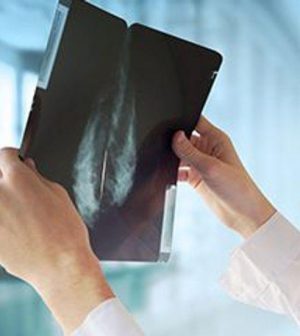
New AI can help detect breast cancer that is spreading to other parts of the body, without the need for biopsies, a new study finds.
The AI analyzes MRI scans to detect the presence of cancer cells in the lymph nodes under the arms, researchers said.
In clinical practice, the AI could help avoid 51% of unnecessary surgical biopsies to test lymph nodes for cancer, while correctly identifying 95% of patients whose breast cancer had spread, results showed.
Most breast cancer deaths are due to cancer that’s spread elsewhere, and the cancer typically first spreads to an armpit lymph node, explained lead researcher Dr. Basak Dogan, director of breast imaging research at UT Southwestern Medical Center.
Finding cancer that’s spread to a lymph node “is critical in guiding treatment decisions, but traditional imaging techniques alone do not have enough sensitivity” to effectively detect it, Dogan said in a medical center news release.
Patients with benign findings from MRI exams or needle biopsies often must undergo surgical lymph node biopsy anyway, because those tests can miss a good number of cancer cells that have spread past the breast, Dogan said.
Researchers trained the AI by feeding the program MRI scans from 350 newly diagnosed breast cancer patients known to have cancer in their lymph nodes.
Testing showed that the newly developed AI was significantly better at identifying these patients than human doctors using MRI or ultrasound, researchers reported recently in the journal Radiology: Imaging Cancer.
“That’s an important advancement because surgical biopsies have side effects and risks, despite having a low probability of a positive result confirming the presence of cancer cells,” Dogan explained. “Improving our ability to rule out [cancer cells in lymph nodes] during a routine MRI — using this model — can reduce that risk while enhancing clinical outcomes.”
More information
The American Cancer Society has more about breast cancer.
SOURCE: UT Southwestern, news release, May 21, 2024
Source: HealthDay
Copyright © 2026 HealthDay. All rights reserved.
Related
-
 Navigating Your Midlife Crisis: Embracing New Possibilities
A midlife crisis can open doors to personal growth...
- December 4, 2025
-
 Want A Happier Hospital? Hire More Nurses, Study Says
Adding even a few extra nurses can dramatically reduce...
- November 20, 2025
-
 Plasma Treatment Shows Promise For Menopause Symptoms Among Breast Cancer Survivors
Plasma infusions may help breast cancer survivors avoid genital...
- November 20, 2025
-
 Self-Hypnosis Can Thwart Hot Flashes
Self-hypnosis might help some women in menopause find relief...
- November 14, 2025






