- How Blue Light Impacts Your Sleep Quality
- Comparing Whey and Plant-Based Protein: Which is Best?
- How Long Does Nicotine Remain in Your System?
- The Best Time of Day to Drink Bone Broth to Maximize Health Benefits
- 8 Ways to Increase Dopamine Naturally
- 7 Best Breads for Maintaining Stable Blood Sugar
- Gelatin vs. Collagen: Which is Best for Skin, Nails, and Joints?
- The Long-Term Effects of Daily Turmeric Supplements on Liver Health
- Could Your Grocery Store Meat Be Causing Recurring UTIs?
- Are You Making This Expensive Thermostat Error This Winter?
Not Just Brushing: 10 Ways to Start Caring for Baby Teeth
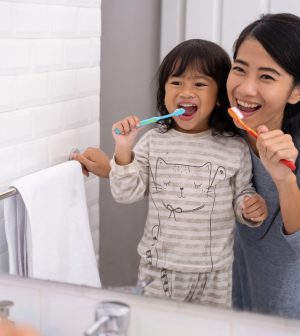
Even the tiniest teeth can decay, which is why it’s important to take care of them.
The American Academy of Pediatrics (AAP) offers some tips for caring for those little teeth, starting before the first one even arrives.
“There are habits you can start now to keep your baby’s teeth healthy,” Dr. David Krol said in an academy news release. “And when that first tooth shows up, there are ways your pediatrician can keep it healthy, too.”
Even before your baby cuts his or her first tooth, start with a routine that includes wiping gums with a clean, damp washcloth or gauze pad after each feeding, the AAP suggests.
Never put your baby to bed with a bottle or give your baby a bottle filled with a sweet drink. Don’t dip your baby’s pacifier in anything sweet like sugar or honey.
Get your child to a dentist by their first birthday or within six months of their first tooth.
Once that first tooth emerges, start using fluoride toothpaste. Use just a small smear, the size of a rice grain, until age 3.
Graduate to a pea-sized amount of fluoride toothpaste when your turns 3. Teach your child to spit without rinsing.
Fluoride is a safe and useful cavity-fighting ingredient, the AAP said. It is a natural mineral that has been added to drinking water in some areas since 1945.
Ask your doctor if you should get a prescription for fluoride drops or chewable tablets for your child if you use a private well or your community water supply doesn’t contain fluoride.
Parents should help or supervise tooth brushing until about age 10.
Your pediatrician can do oral health checkups starting at 6 months, including applying a fluoride varnish. AAP recommends a fluoride varnish every six months until age 5. Some children might need it more often.
All public and private health insurance plans should fully cover this preventive service.
Your child should start using a cup when they reach age 1 year. Skip sugary drinks. Fruit juice, soda and sweetened drinks aren’t good for young teeth. Babies under 1 year should not have juice at all, the AAP advised. Limit older children to 4 ounces per day — half-water/half-juice mixed together.
More information
The U.S. Centers for Disease Control and Prevention has more on children’s oral health.
SOURCE: American Academy of Pediatrics, news release, Jan. 31, 2023
Source: HealthDay
Copyright © 2026 HealthDay. All rights reserved.
Related
-
 Navigating Your Midlife Crisis: Embracing New Possibilities
A midlife crisis can open doors to personal growth...
- December 4, 2025
-
 Want A Happier Hospital? Hire More Nurses, Study Says
Adding even a few extra nurses can dramatically reduce...
- November 20, 2025
-
 Plasma Treatment Shows Promise For Menopause Symptoms Among Breast Cancer Survivors
Plasma infusions may help breast cancer survivors avoid genital...
- November 20, 2025
-
 Self-Hypnosis Can Thwart Hot Flashes
Self-hypnosis might help some women in menopause find relief...
- November 14, 2025