
- How Blue Light Impacts Your Sleep Quality
- Comparing Whey and Plant-Based Protein: Which is Best?
- How Long Does Nicotine Remain in Your System?
- The Best Time of Day to Drink Bone Broth to Maximize Health Benefits
- 8 Ways to Increase Dopamine Naturally
- 7 Best Breads for Maintaining Stable Blood Sugar
- Gelatin vs. Collagen: Which is Best for Skin, Nails, and Joints?
- The Long-Term Effects of Daily Turmeric Supplements on Liver Health
- Could Your Grocery Store Meat Be Causing Recurring UTIs?
- Are You Making This Expensive Thermostat Error This Winter?
Human Brain Has Nearly Ideal Network of Connections, Research Shows
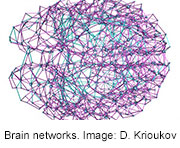
A new study examining why the human brain evolved the way it did could lead to new ways to treat brain disorders, researchers say.
The brain developed into its present form to speed transfer of information from one region of the brain to another, so people can perform at peak capacity, according to Dmitri Krioukov, an associate professor of physics at Northeastern University in Boston, and colleagues.
The investigators found that the brain’s structure contains an almost perfect network of connections.
The researchers first created a map of a brain network that provided the best transfer of information between brain regions. They compared this “idealized” map with the brain’s actual network and found that they were 89 percent similar.
The study was published recently in the journal Nature Communications.
Along with shedding new light on the brain’s evolution, the findings could prove important in helping pinpoint the causes of brain diseases and developing treatments for them, according to Krioukov.
He and his colleagues suspect that breaks or damage in the network’s links are primary candidates for examination in people with brain diseases. Once such areas are identified, it may be possible to develop new drugs or surgical methods to repair or bypass the damage.
“At the end of the day, what we are trying to do is to fix the diseased network so that it can resume its normal function,” Krioukov said in a university news release.
More information
The U.S. National Institute of Neurological Disorders and Stroke has more about the brain.
Source: HealthDay
Copyright © 2026 HealthDay. All rights reserved.
Related
-
 Navigating Your Midlife Crisis: Embracing New Possibilities
A midlife crisis can open doors to personal growth...
- December 4, 2025
-
 Want A Happier Hospital? Hire More Nurses, Study Says
Adding even a few extra nurses can dramatically reduce...
- November 20, 2025
-
 Plasma Treatment Shows Promise For Menopause Symptoms Among Breast Cancer Survivors
Plasma infusions may help breast cancer survivors avoid genital...
- November 20, 2025
-
 Self-Hypnosis Can Thwart Hot Flashes
Self-hypnosis might help some women in menopause find relief...
- November 14, 2025






