
- How Blue Light Impacts Your Sleep Quality
- Comparing Whey and Plant-Based Protein: Which is Best?
- How Long Does Nicotine Remain in Your System?
- The Best Time of Day to Drink Bone Broth to Maximize Health Benefits
- 8 Ways to Increase Dopamine Naturally
- 7 Best Breads for Maintaining Stable Blood Sugar
- Gelatin vs. Collagen: Which is Best for Skin, Nails, and Joints?
- The Long-Term Effects of Daily Turmeric Supplements on Liver Health
- Could Your Grocery Store Meat Be Causing Recurring UTIs?
- Are You Making This Expensive Thermostat Error This Winter?
ICU Delirium Tied to Higher Death Risk, Study Says

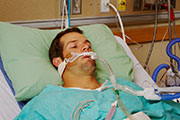
Intensive care unit patients who develop delirium have a higher risk of death, longer hospital stays and are more likely to have mental impairment after leaving the hospital, a large review finds.
Delirium includes confusion, inattention, hallucinations and sometimes agitation. It is more common among the elderly, patients with preexisting mental impairments and the terminally ill, the study authors said.
“The concern about ICU delirium is relatively recent; the first landmark ICU studies about it were published in 2001 and since then it is proving to be a very important and challenging matter in health care,” study co-author Dr. Jorge Salluh, of the D’Or Institute for Research and Education in Brazil, said in an institute news release.
“Delirium can happen due to multiple causes, even if the patient’s disease isn’t neurological. If you have pneumonia, for example, and you go to the ICU you might have delirium and also worse outcomes,” he explained.
The researchers analyzed 42 studies that included a total of more than 16,500 ICU patients. The 32 percent of patients with delirium were twice as likely to die during hospitalization as those without delirium, the study authors found.
Patients with delirium stayed in the intensive care unit 1.4 days longer and required mechanical ventilation to breathe 1.8 days longer than those without delirium, according to the study, published May 31 in the journal BMJ.
The study findings are “a strong signal that all critically ill patients must be screened and monitored for delirium,” study co-author Dr. Robert Stevens, of Johns Hopkins University School of Medicine in Baltimore, said in the news release.
“Now we hope to see comprehensive efforts to decrease the burden of delirium via prevention and therapeutic interventions,” he added.
There are a number of ways to prevent delirium. They include “rational use” of sedation and anesthesia, less reliance on tranquilizers, proper sleep, and early use of mobility and occupational therapy in the ICU, the researchers said.
More information
The U.S. National Library of Medicine has more about delirium.
Source: HealthDay
Copyright © 2026 HealthDay. All rights reserved.
Related
-
 Navigating Your Midlife Crisis: Embracing New Possibilities
A midlife crisis can open doors to personal growth...
- December 4, 2025
-
 Want A Happier Hospital? Hire More Nurses, Study Says
Adding even a few extra nurses can dramatically reduce...
- November 20, 2025
-
 Plasma Treatment Shows Promise For Menopause Symptoms Among Breast Cancer Survivors
Plasma infusions may help breast cancer survivors avoid genital...
- November 20, 2025
-
 Self-Hypnosis Can Thwart Hot Flashes
Self-hypnosis might help some women in menopause find relief...
- November 14, 2025






