
- How Blue Light Impacts Your Sleep Quality
- Comparing Whey and Plant-Based Protein: Which is Best?
- How Long Does Nicotine Remain in Your System?
- The Best Time of Day to Drink Bone Broth to Maximize Health Benefits
- 8 Ways to Increase Dopamine Naturally
- 7 Best Breads for Maintaining Stable Blood Sugar
- Gelatin vs. Collagen: Which is Best for Skin, Nails, and Joints?
- The Long-Term Effects of Daily Turmeric Supplements on Liver Health
- Could Your Grocery Store Meat Be Causing Recurring UTIs?
- Are You Making This Expensive Thermostat Error This Winter?
Exercise Boosts Kids’ Brain Health, Too
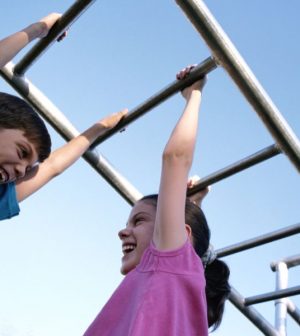
A lack of exercise puts kids at risk for very adult problems, like obesity and diabetes.
Now there’s also research that links exercise to their cognitive development and achievement in school. Turns out that physical activity gives the young brain needed boosts, according to a study published in Monographs of the Society for Research in Child Development.
Active children do better in class and on tests because exercise seems to lead to larger brain volumes in areas associated with memory and thinking functions, such as behavior and decision-making. Active kids also appear to have better concentration and longer attention spans — being fit helps them stay focused to complete assignments, the study authors reported.
These findings appear to be true for children with special needs as well. Physical activity can benefit children with attention-deficit/hyperactivity disorder or an autism spectrum disorder.
The Physical Activity Guidelines for Americans recommends 60 minutes of exercise for children at least five days of every week. With the demands of school and homework, this daily goal can be hard to achieve without help from Mom and Dad.
Work with your child to discover the types of activities he or she would enjoy most. These can be organized, like joining a swimming club or sports teams, or more casual, like bike riding, jumping rope or simply having fun at a local park with friends before starting homework.
It can’t be said enough that kids copy their parents’ behavior. If they see you working out and having a good time, they’ll be more likely to embrace exercise as a regular lifestyle habit. Exercise as a family, and everyone will benefit.
More information
The American Heart Association has a wealth of tips written just for kids to help them be more active.
Source: HealthDay
Copyright © 2026 HealthDay. All rights reserved.
Related
-
 Navigating Your Midlife Crisis: Embracing New Possibilities
A midlife crisis can open doors to personal growth...
- December 4, 2025
-
 Want A Happier Hospital? Hire More Nurses, Study Says
Adding even a few extra nurses can dramatically reduce...
- November 20, 2025
-
 Plasma Treatment Shows Promise For Menopause Symptoms Among Breast Cancer Survivors
Plasma infusions may help breast cancer survivors avoid genital...
- November 20, 2025
-
 Self-Hypnosis Can Thwart Hot Flashes
Self-hypnosis might help some women in menopause find relief...
- November 14, 2025