
- How Blue Light Impacts Your Sleep Quality
- Comparing Whey and Plant-Based Protein: Which is Best?
- How Long Does Nicotine Remain in Your System?
- The Best Time of Day to Drink Bone Broth to Maximize Health Benefits
- 8 Ways to Increase Dopamine Naturally
- 7 Best Breads for Maintaining Stable Blood Sugar
- Gelatin vs. Collagen: Which is Best for Skin, Nails, and Joints?
- The Long-Term Effects of Daily Turmeric Supplements on Liver Health
- Could Your Grocery Store Meat Be Causing Recurring UTIs?
- Are You Making This Expensive Thermostat Error This Winter?
Paddles Against Parkinson’s: Ping Pong Might Ease Symptoms
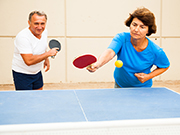
A spirited game of ping pong may be more than just fun: New research suggests it could quell symptoms in Parkinson’s patients.
The small study found that patients with the movement disorder had significant improvements in a wide range of symptoms after taking part in a six-month ping pong exercise program.
“Ping pong, which is also called table tennis, is a form of aerobic exercise that has been shown in the general population to improve hand-eye coordination, sharpen reflexes and stimulate the brain,” said Dr. Ken-ichi Inoue, from Fukuoka University in Japan.
“We wanted to examine if people with Parkinson’s disease would see similar benefits that may in turn reduce some of their symptoms,” Inoue explained.
The study included 12 patients, average age 73, who had mild to moderate Parkinson’s disease and had been diagnosed with the disease for an average of seven years.
The patients were assessed for symptoms and symptom severity, and then they played ping pong once a week for six months. During each weekly five-hour session, they did stretching exercises followed by ping pong with instruction from an experienced player.
The program was developed by experienced ping pong players in the university’s department of sports science, specifically for Parkinson’s disease patients.
Three and six months after they started the ping pong program, the patients had significant improvements in speech, handwriting, getting dressed, getting out of bed, walking, facial expression, posture, rigidity, slowness of movement and hand tremors, according to the report.
The study is scheduled to be presented at the American Academy of Neurology’s annual meeting in Toronto, held from April 25 to May 1. Such research is considered preliminary until published in a peer-reviewed journal.
The researchers noted some study limitations: The patients who played ping pong were not compared to patients who didn’t play the sport, and the patients were assessed by a single specialist.
“While this study is small, the results are encouraging because they show ping pong — a relatively inexpensive form of therapy — may improve some symptoms of Parkinson’s disease,” Inoue said in an academy news release. “A much larger study is now being planned to confirm these findings.”
More information
The Parkinson’s Foundation has more on Parkinson’s disease.
Source: HealthDay
Copyright © 2026 HealthDay. All rights reserved.
Related
-
 Navigating Your Midlife Crisis: Embracing New Possibilities
A midlife crisis can open doors to personal growth...
- December 4, 2025
-
 Want A Happier Hospital? Hire More Nurses, Study Says
Adding even a few extra nurses can dramatically reduce...
- November 20, 2025
-
 Plasma Treatment Shows Promise For Menopause Symptoms Among Breast Cancer Survivors
Plasma infusions may help breast cancer survivors avoid genital...
- November 20, 2025
-
 Self-Hypnosis Can Thwart Hot Flashes
Self-hypnosis might help some women in menopause find relief...
- November 14, 2025






