
- How Blue Light Impacts Your Sleep Quality
- Comparing Whey and Plant-Based Protein: Which is Best?
- How Long Does Nicotine Remain in Your System?
- The Best Time of Day to Drink Bone Broth to Maximize Health Benefits
- 8 Ways to Increase Dopamine Naturally
- 7 Best Breads for Maintaining Stable Blood Sugar
- Gelatin vs. Collagen: Which is Best for Skin, Nails, and Joints?
- The Long-Term Effects of Daily Turmeric Supplements on Liver Health
- Could Your Grocery Store Meat Be Causing Recurring UTIs?
- Are You Making This Expensive Thermostat Error This Winter?
Medical Debt May Soon Return to Credit Reports Under New Trump Rule
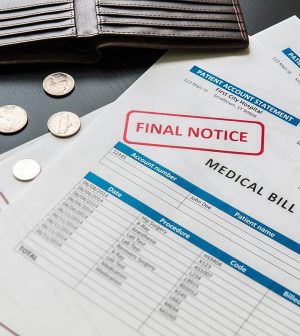
The Trump administration is taking steps to roll back state laws that protect consumers from having medical debt appear on their credit reports.
The move could impact millions of Americans already struggling with unpaid medical bills.
The Consumer Financial Protection Bureau (CFPB) has drafted a rule that would give the federal government sole authority over how debts are reported to major credit bureaus such as Equifax, Experian and TransUnion, The Associated Press reported.
If finalized, the rule would override more than a dozen state laws, including those in New York and Delaware, that ban the reporting of medical debt on consumer credit reports.
The proposed rule would also undo Biden-era policies that gave states flexibility to create their own protections. The CFPB said Congress intended to establish “national standards” under the Fair Credit Reporting Act (FCRA) and that state laws conflict with that goal.
Medical debt is one of the most commonly disputed items on credit reports. Because insurance claims often take time to process, patients can be left with unexpected bills that can harm their credit scores before coverage issues are fixed.
The three major credit bureaus previously agreed to stop reporting unpaid medical debts under $500, a change that removed about 70% of medical debts from credit files.
But some states banned the practice entirely.
Americans owe roughly $220 billion in medical debt, according to the Kaiser Family Foundation (KFF). In Republican-controlled states such as Mississippi, Georgia, South Dakota and West Virginia, about 1 in 6 adults carries medical debt.
Unpaid medical bills can make it harder for people to qualify for loans, credit cards or mortgages.
A CFPB spokesperson did not immediately respond to a Associated Press request for comment on the proposed rule.
More information
The Consumer Financial Protection Bureau has more on the medical debt burden in the United States.
SOURCE: The Associated Press, Oct. 28, 2025
Source: HealthDay
Copyright © 2026 HealthDay. All rights reserved.
Related
-
 Navigating Your Midlife Crisis: Embracing New Possibilities
A midlife crisis can open doors to personal growth...
- December 4, 2025
-
 Want A Happier Hospital? Hire More Nurses, Study Says
Adding even a few extra nurses can dramatically reduce...
- November 20, 2025
-
 Plasma Treatment Shows Promise For Menopause Symptoms Among Breast Cancer Survivors
Plasma infusions may help breast cancer survivors avoid genital...
- November 20, 2025
-
 Self-Hypnosis Can Thwart Hot Flashes
Self-hypnosis might help some women in menopause find relief...
- November 14, 2025