
- How Blue Light Impacts Your Sleep Quality
- Comparing Whey and Plant-Based Protein: Which is Best?
- How Long Does Nicotine Remain in Your System?
- The Best Time of Day to Drink Bone Broth to Maximize Health Benefits
- 8 Ways to Increase Dopamine Naturally
- 7 Best Breads for Maintaining Stable Blood Sugar
- Gelatin vs. Collagen: Which is Best for Skin, Nails, and Joints?
- The Long-Term Effects of Daily Turmeric Supplements on Liver Health
- Could Your Grocery Store Meat Be Causing Recurring UTIs?
- Are You Making This Expensive Thermostat Error This Winter?
Embryo Technology Might Lead to Children With Genes From Two Men
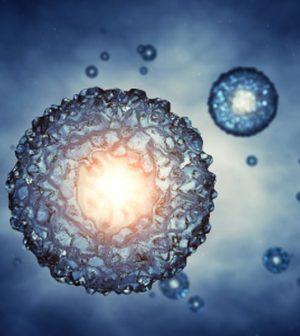
New technology might soon allow men in same-sex relationships to have a child genetically related to both dads, researchers say.
The technology uses skin cells from one person to alter the genetics of a donated egg, researchers reported March 8 in the journal Science Advances.
That egg can then be fertilized by a sperm cell to create a viable embryo containing the combined genetics of the skin donor and the sperm donor.
This could help same-sex couples produce their own child, as well as help women who aren’t able to produce viable eggs due to advanced age, cancer treatment or other causes.
“The goal is to produce eggs for patients who don’t have their own eggs,” said senior author Shoukhrat Mitalipov, director of the Oregon Health & Science University Center for Embryonic Cell and Gene Therapy.
This is the same technique that researchers famously used in 1996 to clone a sheep in Scotland named Dolly, researchers said.
In that case, researchers created a clone of one parent, while the OHSU researchers focused on creating embryos with genetics drawn from both parents.
The OHSU team followed a three-step process to do this in mouse experiments.
They first stripped a mouse egg of its nucleus, then transplanted the nucleus of a mouse skin cell into the mouse egg.
Next, they prompted the implanted skin cell nucleus to discard half its chromosomes, in a process similar to that which occurs in cells dividing to produce mature sperm or egg cells.
Finally, the researchers fertilize the new egg with sperm using in vitro fertilization, resulting in a healthy embryo with two sets of chromosomes equally donated by two parents.
This process could prove a simpler option to a competing technique that other labs around the world are testing, in which skin cells are fully reprogrammed to become either egg or sperm cells.
“We’re skipping that whole step of cell reprogramming,” researcher Dr. Paula Amato, a professor of obstetrics and gynecology in the OHSU School of Medicine, said in a school news release. “The advantage of our technique is that it avoids the long culture time it takes to reprogram the cell. Over several months, a lot of deleterious genetic and epigenetic changes can happen.”
However, researchers warn that it will be years before this technique could be available for humans.
“This gives us a lot of insight,” Amato said. “But there is still a lot of work that needs to be done to understand how these chromosomes pair and how they faithfully divide to actually reproduce what happens in nature.”
More information
Planned Parenthood has more about in vitro fertilization.
SOURCE: Oregon Health & Science University, news release, March 9, 2024
Source: HealthDay
Copyright © 2026 HealthDay. All rights reserved.
Related
-
 Navigating Your Midlife Crisis: Embracing New Possibilities
A midlife crisis can open doors to personal growth...
- December 4, 2025
-
 Want A Happier Hospital? Hire More Nurses, Study Says
Adding even a few extra nurses can dramatically reduce...
- November 20, 2025
-
 Plasma Treatment Shows Promise For Menopause Symptoms Among Breast Cancer Survivors
Plasma infusions may help breast cancer survivors avoid genital...
- November 20, 2025
-
 Self-Hypnosis Can Thwart Hot Flashes
Self-hypnosis might help some women in menopause find relief...
- November 14, 2025






