- How Blue Light Impacts Your Sleep Quality
- Comparing Whey and Plant-Based Protein: Which is Best?
- How Long Does Nicotine Remain in Your System?
- The Best Time of Day to Drink Bone Broth to Maximize Health Benefits
- 8 Ways to Increase Dopamine Naturally
- 7 Best Breads for Maintaining Stable Blood Sugar
- Gelatin vs. Collagen: Which is Best for Skin, Nails, and Joints?
- The Long-Term Effects of Daily Turmeric Supplements on Liver Health
- Could Your Grocery Store Meat Be Causing Recurring UTIs?
- Are You Making This Expensive Thermostat Error This Winter?
Hearing Their Own Babble Helps Babies Learn to Speak: Study

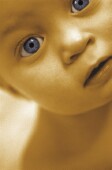
Hearing themselves make speech-like sounds such as cooing and babbling is crucial to infants’ speech and language development, a new study shows.
The researchers also found that infants with major hearing loss who received cochlear implants to improve their hearing quickly reached the vocalization levels of infants with no hearing problems.
“Hearing is a critical aspect of infants’ motivation to make early sounds,” study author Mary Fagan, an assistant professor in the department of communication science and disorders at the University of Missouri, said in a university news release.
“This study shows babies are interested in speech-like sounds, and that they increase their babbling when they can hear,” she added.
The study included 27 hearing infants and 16 infants who had major hearing loss, but later received cochlear implants. Initially, the infants with hearing loss vocalized far less than those with no hearing problems. However, within four months of receiving their cochlear implants, the infants with hearing loss had the same levels of vocalization as those with normal hearing.
“These findings support the importance of early hearing screenings and early cochlear implantation,” Fagan said.
She and her colleagues also found that non-speech sounds such as crying and laughing were not affected by infants’ hearing ability.
“Babies learn so much through sound in the first year of their lives,” Fagan said. “We know learning from others is important to infants’ development, but hearing allows infants to explore their own vocalizations and learn through their own capacity to produce sounds.”
The study was published recently in the Journal of Experimental Child Psychology.
More information
The U.S. National Institute on Deafness and Other Communication Disorders has more about speech and language development.
Source: HealthDay
Copyright © 2026 HealthDay. All rights reserved.
Related
-
 Navigating Your Midlife Crisis: Embracing New Possibilities
A midlife crisis can open doors to personal growth...
- December 4, 2025
-
 Want A Happier Hospital? Hire More Nurses, Study Says
Adding even a few extra nurses can dramatically reduce...
- November 20, 2025
-
 Plasma Treatment Shows Promise For Menopause Symptoms Among Breast Cancer Survivors
Plasma infusions may help breast cancer survivors avoid genital...
- November 20, 2025
-
 Self-Hypnosis Can Thwart Hot Flashes
Self-hypnosis might help some women in menopause find relief...
- November 14, 2025