
- How Blue Light Impacts Your Sleep Quality
- Comparing Whey and Plant-Based Protein: Which is Best?
- How Long Does Nicotine Remain in Your System?
- The Best Time of Day to Drink Bone Broth to Maximize Health Benefits
- 8 Ways to Increase Dopamine Naturally
- 7 Best Breads for Maintaining Stable Blood Sugar
- Gelatin vs. Collagen: Which is Best for Skin, Nails, and Joints?
- The Long-Term Effects of Daily Turmeric Supplements on Liver Health
- Could Your Grocery Store Meat Be Causing Recurring UTIs?
- Are You Making This Expensive Thermostat Error This Winter?
No Link Found Between Migraines, Parkinson’s Disease
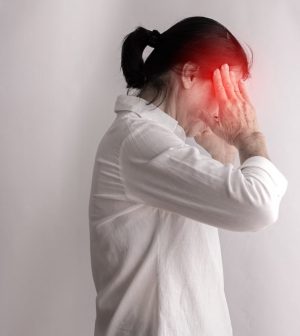
Women who suffer frequent migraines don’t have any increased risk of developing Parkinson’s disease, finds a new study that refutes earlier research.
“These results are reassuring for women who have migraine, which itself causes many burdens, that they don’t have to worry about an increased risk of Parkinson’s disease in the future,” said researcher Dr. Tobias Kurth, director of the Institute of Public Health at Charité – Universitätsmedizin Berlin in Germany.
For the study, researchers tracked more than 39,000 women, of whom more than 7,300 had suffered migraines.
During a follow-up of 22 years, 685 of the women were diagnosed with Parkinson’s disease — 128 with a history of migraine and 557 with no migraine.
After adjusting for other factors that can affect Parkinson’s risk, researchers found that women with migraine were no more likely to develop the neurodegenerative disease than those without.
It didn’t matter if a woman had frequent migraines, or if she experienced visual auras prior to a migraine headache — the result always was no association between migraine and Parkinson’s, researchers said.
However, more research is needed to confirm the lack of a link between migraines and Parkinson’s, researchers said.
The findings were published Aug. 21 in the journal Neurology.
“Since this study involved only female health professionals who were primarily white people, more research is needed to determine whether the results will apply to other groups, including men, women and other races, ethnicities and gender identities,” Kurth said in a journal news release.
More information
The Association of Migraine Disorders has more about migraine and Parkinson’s disease.
SOURCE: American Academy of Neurology, news release, Aug. 21, 2024
Source: HealthDay
Copyright © 2026 HealthDay. All rights reserved.
Related
-
 Navigating Your Midlife Crisis: Embracing New Possibilities
A midlife crisis can open doors to personal growth...
- December 4, 2025
-
 Want A Happier Hospital? Hire More Nurses, Study Says
Adding even a few extra nurses can dramatically reduce...
- November 20, 2025
-
 Plasma Treatment Shows Promise For Menopause Symptoms Among Breast Cancer Survivors
Plasma infusions may help breast cancer survivors avoid genital...
- November 20, 2025
-
 Self-Hypnosis Can Thwart Hot Flashes
Self-hypnosis might help some women in menopause find relief...
- November 14, 2025






