
- How Blue Light Impacts Your Sleep Quality
- Comparing Whey and Plant-Based Protein: Which is Best?
- How Long Does Nicotine Remain in Your System?
- The Best Time of Day to Drink Bone Broth to Maximize Health Benefits
- 8 Ways to Increase Dopamine Naturally
- 7 Best Breads for Maintaining Stable Blood Sugar
- Gelatin vs. Collagen: Which is Best for Skin, Nails, and Joints?
- The Long-Term Effects of Daily Turmeric Supplements on Liver Health
- Could Your Grocery Store Meat Be Causing Recurring UTIs?
- Are You Making This Expensive Thermostat Error This Winter?
Personalized ‘Pills’ From a 3D Printer?
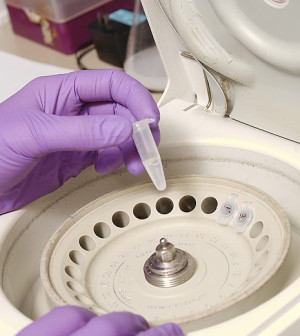
With 3D printing, the concept of personalized medicine could take on a new dimension, researchers report.
Mass-produced drugs can’t take into account specific patient characteristics such as race, weight, and kidney and liver functions. Customized medications, on the other hand, might be more effective and less likely to cause side effects, the researchers said.
For this study, investigators from Wake Forest University, Columbia University and the University of North Carolina created a prototype computer algorithm featuring software for 3D printing of personalized medications. After receiving details about a patient’s specific medical and biological characteristics, the software determines personalized doses and provides data for 3D printing of medications.
Five doses of 80 “pills” — ranging from 124 to 373 milligrams — were created through 3D printing, with little variability, the researchers said.
The findings show that using 3D printing to create customized medications is possible. But, further research is needed before this technology might become available for patients, said Dr. Min Pu, of Wake Forest University School of Medicine, and colleagues in an American Heart Association news release.
The study was to be presented Monday at the American Heart Association’s annual meeting in Orlando, Fla. Data and conclusions presented at meetings should be considered preliminary until published in a peer-reviewed medical journal.
More information
The U.S. National Institutes of Health has more about personalized medicine.
There’s more on heart attack prevention at the U.S. National Heart, Lung, and Blood Institute.
Source: HealthDay
Copyright © 2026 HealthDay. All rights reserved.
Related
-
 Navigating Your Midlife Crisis: Embracing New Possibilities
A midlife crisis can open doors to personal growth...
- December 4, 2025
-
 Want A Happier Hospital? Hire More Nurses, Study Says
Adding even a few extra nurses can dramatically reduce...
- November 20, 2025
-
 Plasma Treatment Shows Promise For Menopause Symptoms Among Breast Cancer Survivors
Plasma infusions may help breast cancer survivors avoid genital...
- November 20, 2025
-
 Self-Hypnosis Can Thwart Hot Flashes
Self-hypnosis might help some women in menopause find relief...
- November 14, 2025






