
- How Blue Light Impacts Your Sleep Quality
- Comparing Whey and Plant-Based Protein: Which is Best?
- How Long Does Nicotine Remain in Your System?
- The Best Time of Day to Drink Bone Broth to Maximize Health Benefits
- 8 Ways to Increase Dopamine Naturally
- 7 Best Breads for Maintaining Stable Blood Sugar
- Gelatin vs. Collagen: Which is Best for Skin, Nails, and Joints?
- The Long-Term Effects of Daily Turmeric Supplements on Liver Health
- Could Your Grocery Store Meat Be Causing Recurring UTIs?
- Are You Making This Expensive Thermostat Error This Winter?
Air and Noise Pollution May Make You Vulnerable to Heart Failure
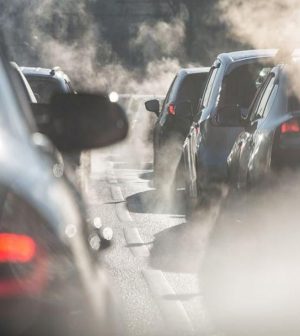
Years of exposure to air pollution and traffic noise could make you more vulnerable to heart failure, a new study warns.
“We found that long-term exposure to specific air pollutants and road traffic noise increased the risk of incident heart failure, especially for former smokers or people with hypertension, so preventive and educational measures are necessary,” said lead study author Youn-Hee Lim, an assistant professor in the section of environmental health at the University of Copenhagen.
“To minimize the impact of these exposures, broad public tactics such as emissions control measures should be implemented. Strategies like smoking cessation and blood pressure control must be encouraged to help reduce individual risk,” she added.
Lim’s study analyzed data on more than 22,000 female nurses in Denmark who were followed for 15 to 20 years.
The researchers found that for every 5.1 micrograms per cubic meter of air (µg/m3) increase in exposure to fine-particulate matter air pollution (PM2.5) over three years, the risk of heart failure rose by 17%. For every 8.6 µg/m3 increase in nitrogen dioxide (NO2) exposure over three years, the risk of heart failure increased by 10%. For every 9.3-decibel increase in road traffic noise exposure over three years, the risk of heart failure rose by 12%.
But increased exposure to fine-particulate matter and being a former smoker were associated with a whopping 72% increased risk of heart failure, according to the study published Oct. 6 in the Journal of the American Heart Association.
“We were surprised by how two environmental factors — air pollution and road traffic noise — interacted,” Lim said in a journal news release. “Air pollution was a stronger contributor to heart failure incidence compared to road traffic noise; however, the women exposed to both high levels of air pollution and road traffic noise showed the highest increase in heart failure risk.
“In addition, about 12% of the total study participants had hypertension at enrollment of the study,” Lim noted. “However, 30% of the nurses with heart failure incidence had a previous history of hypertension, and they were the most susceptible population to air pollution exposure.”
More information
The U.S. National Heart, Lung, and Blood Institute has more on heart failure.
SOURCE: Journal of the American Heart Association, news release, Oct. 6, 2021
Source: HealthDay
Copyright © 2026 HealthDay. All rights reserved.
Related
-
 Navigating Your Midlife Crisis: Embracing New Possibilities
A midlife crisis can open doors to personal growth...
- December 4, 2025
-
 Want A Happier Hospital? Hire More Nurses, Study Says
Adding even a few extra nurses can dramatically reduce...
- November 20, 2025
-
 Plasma Treatment Shows Promise For Menopause Symptoms Among Breast Cancer Survivors
Plasma infusions may help breast cancer survivors avoid genital...
- November 20, 2025
-
 Self-Hypnosis Can Thwart Hot Flashes
Self-hypnosis might help some women in menopause find relief...
- November 14, 2025






