
- How Blue Light Impacts Your Sleep Quality
- Comparing Whey and Plant-Based Protein: Which is Best?
- How Long Does Nicotine Remain in Your System?
- The Best Time of Day to Drink Bone Broth to Maximize Health Benefits
- 8 Ways to Increase Dopamine Naturally
- 7 Best Breads for Maintaining Stable Blood Sugar
- Gelatin vs. Collagen: Which is Best for Skin, Nails, and Joints?
- The Long-Term Effects of Daily Turmeric Supplements on Liver Health
- Could Your Grocery Store Meat Be Causing Recurring UTIs?
- Are You Making This Expensive Thermostat Error This Winter?
Link Between Gum Disease, Brain Function Exists, Small Study Says
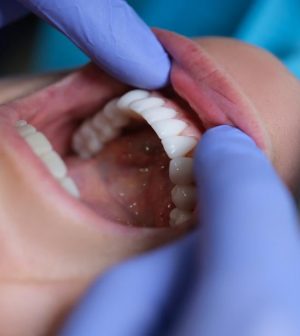
Gum disease appears to disrupt brain activity, potentially increasing a person’s risk of cognitive decline.
People with gum disease experienced altered connections between different brain regions, compared to folks with good dental health, MRI scans show in a new study.
“These differences suggest that periodontitis may negatively affect brain function even in normal cognition,” concluded the research team led by Xaiohu Li, an associate professor of radiology with the First Affiliated Hospital of Anhui Medical University in Hefei, China.
Further, the results indicate that “periodontitis might be a potential risk factor for brain damage and provides a theoretical clue and a new treatment target for the early prevention of Alzheimer disease,” the team wrote in its report published recently in the Journal of Periodontology.
For the study, researchers studied the oral health and brain activity of 51 people, including 11 with healthy gums, 14 with mild gum disease, and 26 with moderate-to-severe gum disease.
The people with moderate-to-severe gum disease displayed changes in connections between and within different brain regions, researchers said.
Overall, gum disease was associated with impairment of network function within the brain.
“To the best of our knowledge, the present study is the first to compare brain function changes in elderly individuals with normal cognition with different severity levels of periodontitis from the perspective of brain networks,” researchers wrote.
These changes might be caused by brain inflammation promoted by gum infections.
Bacteria from diseased gums can invade brain tissues, promoting an immune response, researchers said.
Prior studies also have found higher levels of amyloid beta deposits — a hallmark of Alzheimer’s — in the brains of people with gum disease, researchers said.
“These findings not only enrich our understanding of periodontitis but also contribute to the development of potential imaging biomarkers and may provide new approaches for the early prevention and treatment of AD [Alzheimer’s disease],” researchers wrote.
“The present study has important implications for improving not only oral health but also neurological health worldwide,” they concluded.
More information
University Hospitals has more on the impact of gum disease on health.
SOURCE: American Academy of Periodontology, news release, Jan. 9, 2025
Source: HealthDay
Copyright © 2026 HealthDay. All rights reserved.
Related
-
 Navigating Your Midlife Crisis: Embracing New Possibilities
A midlife crisis can open doors to personal growth...
- December 4, 2025
-
 Want A Happier Hospital? Hire More Nurses, Study Says
Adding even a few extra nurses can dramatically reduce...
- November 20, 2025
-
 Plasma Treatment Shows Promise For Menopause Symptoms Among Breast Cancer Survivors
Plasma infusions may help breast cancer survivors avoid genital...
- November 20, 2025
-
 Self-Hypnosis Can Thwart Hot Flashes
Self-hypnosis might help some women in menopause find relief...
- November 14, 2025






