
- How Blue Light Impacts Your Sleep Quality
- Comparing Whey and Plant-Based Protein: Which is Best?
- How Long Does Nicotine Remain in Your System?
- The Best Time of Day to Drink Bone Broth to Maximize Health Benefits
- 8 Ways to Increase Dopamine Naturally
- 7 Best Breads for Maintaining Stable Blood Sugar
- Gelatin vs. Collagen: Which is Best for Skin, Nails, and Joints?
- The Long-Term Effects of Daily Turmeric Supplements on Liver Health
- Could Your Grocery Store Meat Be Causing Recurring UTIs?
- Are You Making This Expensive Thermostat Error This Winter?
Study Reveals How the Brain Lets Go of Fear
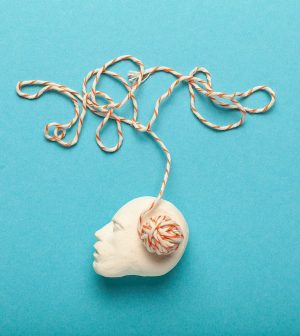
Feeling scared? Your fear is a survival tool, but sometimes, it overreacts — making us afraid of things that aren’t true threats.
A new study shows how the brain learns to let go of unnecessary fears, offering potential new ways for treating conditions such as anxiety, PTSD and phobias.
Published in the journal Science, it tracked how mice responded to repeated harmless threats, such as a shadow that mimicked a predatory bird’s swoop.
Over time, the mice learned the shadow wasn’t dangerous and stopped reacting.
Scientists found that this “unlearning” of fear was stored in a previously overlooked part of the brain called the ventrolateral geniculate nucleus (vLGN).
“We’ve uncovered the mechanism by which the brain — through experience — can understand which potential instinctive dangers are actually not a danger,” study leader Sara Mederos, a neuroscientist at University College London’s Sainsbury Wellcome Center, told The Washington Post.
In the study, about 100 mice were exposed to 30 to 50 simulated “swoops,” using an expanding overhead shadow to mimic a bird of prey.
By inserting silicon probes in the mice’s brains, scientists discovered that while the visual cortex helped the mice recognize the harmless threat, the vLGN actually helped store the memory to disregard it.
By focusing on specific molecules and neurotransmitters released in this area of the brain, researchers think it may be possible to help people unlearn fears that contribute to anxiety and PTSD.
“Particular drugs targeted specifically to the [vLGN] could be pharmacological approaches that would help with treating anxiety or PTSD,” Mederos said.
More information
The Cold Spring Harbor Laboratory has more on how the brain processes fear.
SOURCE: The Washington Post, media report, Feb. 6, 2025
Source: HealthDay
Copyright © 2026 HealthDay. All rights reserved.
Related
-
 Navigating Your Midlife Crisis: Embracing New Possibilities
A midlife crisis can open doors to personal growth...
- December 4, 2025
-
 Want A Happier Hospital? Hire More Nurses, Study Says
Adding even a few extra nurses can dramatically reduce...
- November 20, 2025
-
 Plasma Treatment Shows Promise For Menopause Symptoms Among Breast Cancer Survivors
Plasma infusions may help breast cancer survivors avoid genital...
- November 20, 2025
-
 Self-Hypnosis Can Thwart Hot Flashes
Self-hypnosis might help some women in menopause find relief...
- November 14, 2025






