
- How Blue Light Impacts Your Sleep Quality
- Comparing Whey and Plant-Based Protein: Which is Best?
- How Long Does Nicotine Remain in Your System?
- The Best Time of Day to Drink Bone Broth to Maximize Health Benefits
- 8 Ways to Increase Dopamine Naturally
- 7 Best Breads for Maintaining Stable Blood Sugar
- Gelatin vs. Collagen: Which is Best for Skin, Nails, and Joints?
- The Long-Term Effects of Daily Turmeric Supplements on Liver Health
- Could Your Grocery Store Meat Be Causing Recurring UTIs?
- Are You Making This Expensive Thermostat Error This Winter?
Obesity No Barrier For Shoulder Replacement Surgery, Study Finds
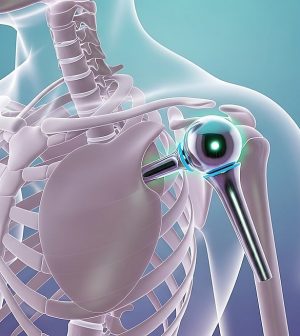
Obesity shouldn’t be considered a barrier for a patient who needs shoulder replacement surgery, a new study argues.
In some places, doctors have been denying joint replacement surgery to people with a high body-mass index, due to concerns over their ability to recover from the procedure, researchers said in background notes.
But patients with obesity actually have a lower risk of death following the surgery than patients at a healthy weight, researchers reported Nov. 20 in the journal PLOS Medicine.
They also had about the same risk of suffering serious complications or needing follow-up surgery, researchers found.
In fact, underweight patients fared worst following shoulder replacement surgery, results show.
“While BMI thresholds have been used to limit access to joint replacement surgery, our findings do not support restricting higher BMI patients from accessing shoulder replacement surgery,” senior researcher Dr. Jonathan Rees, director of the Botnar Institute for Musculoskeletal Sciences at the University of Oxford, said in a news release.
Even though medical societies have offered no formal recommendations regarding a patient’s weight and joint replacement surgery, previous studies have found that in some countries access to these procedures is restricted based on BMI, researchers said in background notes.
For this new study, researchers tracked nearly 21,000 patients who underwent shoulder replacement surgery in the United Kingdom and Denmark.
Results showed that people with obesity had a 60% lower risk of death within a year of the surgery compared to those with a healthy weight.
By comparison, underweight people had a 69% increased risk of death within 90 days of the surgery, as well as a 36% higher risk of serious complications and 70% higher odds of needing follow-up surgery. A BMI of less than 18.5 is considered underweight.
The study’s findings are limited because few people with a high BMI got shoulder surgery — 131 in the U.K and 70 in Denmark.
But researchers argue that the large study consistently showed that obese people had a lower risk of death in two different countries.
“Shoulder replacements offer patients the opportunity for excellent pain relief and improved quality of life,” lead researcher Dr. Epaminondas Markos Valsamis, a research fellow with the University of Oxford, said in a news release. “Our research shows that patients with a higher BMI do not have poorer outcomes after shoulder replacement surgery.”
More information
Massachusetts General Hospital has more on shoulder replacement surgery.
SOURCES: PLOS, news release, Nov. 20, 2025; PLOS Medicine, Nov. 20, 2025
Source: HealthDay
Copyright © 2026 HealthDay. All rights reserved.
Related
-
 Navigating Your Midlife Crisis: Embracing New Possibilities
A midlife crisis can open doors to personal growth...
- December 4, 2025
-
 Want A Happier Hospital? Hire More Nurses, Study Says
Adding even a few extra nurses can dramatically reduce...
- November 20, 2025
-
 Plasma Treatment Shows Promise For Menopause Symptoms Among Breast Cancer Survivors
Plasma infusions may help breast cancer survivors avoid genital...
- November 20, 2025
-
 Self-Hypnosis Can Thwart Hot Flashes
Self-hypnosis might help some women in menopause find relief...
- November 14, 2025






