
- How Blue Light Impacts Your Sleep Quality
- Comparing Whey and Plant-Based Protein: Which is Best?
- How Long Does Nicotine Remain in Your System?
- The Best Time of Day to Drink Bone Broth to Maximize Health Benefits
- 8 Ways to Increase Dopamine Naturally
- 7 Best Breads for Maintaining Stable Blood Sugar
- Gelatin vs. Collagen: Which is Best for Skin, Nails, and Joints?
- The Long-Term Effects of Daily Turmeric Supplements on Liver Health
- Could Your Grocery Store Meat Be Causing Recurring UTIs?
- Are You Making This Expensive Thermostat Error This Winter?
A Common Trait Between Newborns And Alzheimer’s Patients?
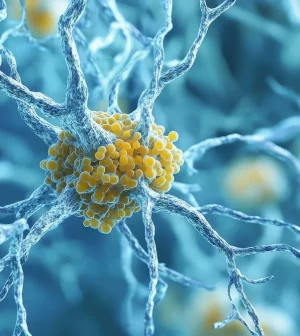
The brains of newborns have a surprising trait in common with adults who’ve developed Alzheimer’s disease, a recent study says.
Both have elevated blood levels of a well-known biomarker for Alzheimer’s – a protein called phosphorylated tau, researchers reported recently in the journal Brain Communications.
Tau is associated with the amyloid beta plaques and tau tangles that riddle the brains of people with Alzheimer’s, researchers noted.
But in newborns, this tau surge appears to support healthy brain development, helping neurons grow and form connections with other neurons, researchers found.
This hints that human brains might have built-in protection against tau’s potentially damaging effects, so newborns can tolerate and even benefit from heavy levels of tau without triggering Alzheimer’s-like damage, researchers said.
“We believe that understanding how this natural protection works — and why we lose it as we age — could offer a roadmap for new treatments,” lead investigator Fernando Gonzalez-Ortiz, a doctoral student at the University of Gothenburg in Sweden, said in a news release.
“If we can learn how the newborn brain keeps tau in check, we might one day mimic those processes to slow or stop Alzheimer’s in its tracks,” he added.
For the new study, researchers compared blood levels of a type of tau called p-tau217 in more than 400 people, including newborns, teenagers, young adults, seniors and people with either mild cognitive impairment or Alzheimer’s.
Blood testing for p-tau217 recently received FDA approval for use in diagnosing Alzheimer’s disease, researchers noted.
Results showed that newborns had the highest levels of p-tau217 — even higher than those found in diagnosed Alzheimer’s patients, researchers said.
The levels were particularly elevated in premature babies, and started to decrease over the first few months of life until they settled to levels typically found in young adults.
Researchers also found that p-tau217 levels were closely linked to how early babies were born. The earlier the birth, the higher the baby’s tau levels, suggesting that it serves a role supporting rapid brain growth under challenging developmental conditions.
Future studies should explore the protective mechanisms that protect babies’ brains from the development of tau tangles found in Alzheimer’s patients, researchers said.
More information
The Alzheimer’s Association has more on amyloid beta and tau.
SOURCE: University of Gothenburg, news release, June 24, 2025
Source: HealthDay
Copyright © 2026 HealthDay. All rights reserved.
Related
-
 Navigating Your Midlife Crisis: Embracing New Possibilities
A midlife crisis can open doors to personal growth...
- December 4, 2025
-
 Want A Happier Hospital? Hire More Nurses, Study Says
Adding even a few extra nurses can dramatically reduce...
- November 20, 2025
-
 Plasma Treatment Shows Promise For Menopause Symptoms Among Breast Cancer Survivors
Plasma infusions may help breast cancer survivors avoid genital...
- November 20, 2025
-
 Self-Hypnosis Can Thwart Hot Flashes
Self-hypnosis might help some women in menopause find relief...
- November 14, 2025






