
- How Blue Light Impacts Your Sleep Quality
- Comparing Whey and Plant-Based Protein: Which is Best?
- How Long Does Nicotine Remain in Your System?
- The Best Time of Day to Drink Bone Broth to Maximize Health Benefits
- 8 Ways to Increase Dopamine Naturally
- 7 Best Breads for Maintaining Stable Blood Sugar
- Gelatin vs. Collagen: Which is Best for Skin, Nails, and Joints?
- The Long-Term Effects of Daily Turmeric Supplements on Liver Health
- Could Your Grocery Store Meat Be Causing Recurring UTIs?
- Are You Making This Expensive Thermostat Error This Winter?
Cell Calls, Texts Can Distract Even If Unanswered

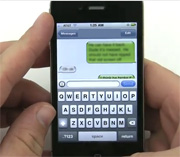
Simply hearing your mobile phone ring or feeling it vibrate is enough to significantly distract you, a new study suggests.
And, the level of distraction is similar to that of actually talking or sending text messages on the device, the researchers found.
“The level of how much it affected the task at hand was really shocking,” study co-author Courtney Yehnert, a research coordinator at Florida State University, said in a university news release.
The study was published recently in the Journal of Experimental Psychology: Human Perception and Performance.
“Although these notifications are generally short in duration, they can prompt task-irrelevant thoughts, or mind-wandering, which has been shown to damage task performance,” the researchers wrote.
“Cellular phone notifications alone significantly disrupt performance on an attention-demanding task, even when participants do not directly interact with a mobile device during the task,” they added.
In the study, participants’ performance on a computer task was assessed when they had no distractions and when they received calls or message alerts on their cellphones. They did much worse — making about three times as many mistakes — on the task when distracted by calls or text alerts on their cellphones, the study found.
Previous studies have shown that using a mobile phone leads to poorer performance when people are trying to do other things. This study is the first of its kind and shows that simply being aware of a missed call or text can have the same effect, the researchers said.
They added that while the study did not involve driving, the results are relevant to the issue of distracted driving.
“Even a slight distraction can have severe, potentially life-threatening effects if that distraction occurs at the wrong time,” lead author Cary Stothart, a psychology doctoral student at Florida State University, said in the news release.
“When driving, it’s impossible to know when ‘the wrong time’ will occur. Our results suggest that it is safest for people to mute or turn off their phones and put them out of sight while driving,” Stothart added.
More information
The U.S. Centers for Disease Control and Prevention has more about distracted driving.
Source: HealthDay
Copyright © 2026 HealthDay. All rights reserved.
Related
-
 Navigating Your Midlife Crisis: Embracing New Possibilities
A midlife crisis can open doors to personal growth...
- December 4, 2025
-
 Want A Happier Hospital? Hire More Nurses, Study Says
Adding even a few extra nurses can dramatically reduce...
- November 20, 2025
-
 Plasma Treatment Shows Promise For Menopause Symptoms Among Breast Cancer Survivors
Plasma infusions may help breast cancer survivors avoid genital...
- November 20, 2025
-
 Self-Hypnosis Can Thwart Hot Flashes
Self-hypnosis might help some women in menopause find relief...
- November 14, 2025