
- How Blue Light Impacts Your Sleep Quality
- Comparing Whey and Plant-Based Protein: Which is Best?
- How Long Does Nicotine Remain in Your System?
- The Best Time of Day to Drink Bone Broth to Maximize Health Benefits
- 8 Ways to Increase Dopamine Naturally
- 7 Best Breads for Maintaining Stable Blood Sugar
- Gelatin vs. Collagen: Which is Best for Skin, Nails, and Joints?
- The Long-Term Effects of Daily Turmeric Supplements on Liver Health
- Could Your Grocery Store Meat Be Causing Recurring UTIs?
- Are You Making This Expensive Thermostat Error This Winter?
Soft Skin of Others May Be an Illusion, Study Says

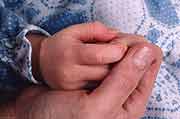
It’s been said that beauty is in the eye of the beholder, and it turns out the feeling of soft skin may be just as subjective.
Researchers conducted a series of experiments and found that participants consistently rated the skin of another person as being softer than their own, even if it wasn’t. This “illusion” may occur in order to help people build social bonds through touch, the study authors suggested.
“What is intriguing about the illusion is its specificity,” study co-author Antje Gentsch, from University College London in the United Kingdom, said in a news release from the journal Current Biology.
The illusion was strongest when the stroking was the soft, gentle touch of an intimate relationship, Gentsch explained.
The skin softness “illusion” in the mind of the person doing the touching seems to be dependent on areas of the body and stroking speeds most likely to give pleasure to the other person, the researchers said.
“The illusion reveals a largely automatic and unconscious mechanism by which ‘giving pleasure is receiving pleasure’ in the touch domain,” study leader Aikaterini Fotopoulou, from University College London, said in the news release.
Social touch is important throughout people’s lives and provides physical and mental health benefits, according to the researchers.
Previous studies have shown that softness and smoothness affect areas of the brain tied to emotion and reward. So the illusion that other people’s skin is softer than it actually is provides people doing the touching with their own reward, the study authors said.
Results of the study were published Sept. 10 in Current Biology.
More information
For tips on making your skin more touchable, go to the American Academy of Dermatology.
Source: HealthDay
Copyright © 2026 HealthDay. All rights reserved.
Related
-
 Navigating Your Midlife Crisis: Embracing New Possibilities
A midlife crisis can open doors to personal growth...
- December 4, 2025
-
 Want A Happier Hospital? Hire More Nurses, Study Says
Adding even a few extra nurses can dramatically reduce...
- November 20, 2025
-
 Plasma Treatment Shows Promise For Menopause Symptoms Among Breast Cancer Survivors
Plasma infusions may help breast cancer survivors avoid genital...
- November 20, 2025
-
 Self-Hypnosis Can Thwart Hot Flashes
Self-hypnosis might help some women in menopause find relief...
- November 14, 2025






