
- How Blue Light Impacts Your Sleep Quality
- Comparing Whey and Plant-Based Protein: Which is Best?
- How Long Does Nicotine Remain in Your System?
- The Best Time of Day to Drink Bone Broth to Maximize Health Benefits
- 8 Ways to Increase Dopamine Naturally
- 7 Best Breads for Maintaining Stable Blood Sugar
- Gelatin vs. Collagen: Which is Best for Skin, Nails, and Joints?
- The Long-Term Effects of Daily Turmeric Supplements on Liver Health
- Could Your Grocery Store Meat Be Causing Recurring UTIs?
- Are You Making This Expensive Thermostat Error This Winter?
Can Texting Your Therapist Work? New Study Says Yes
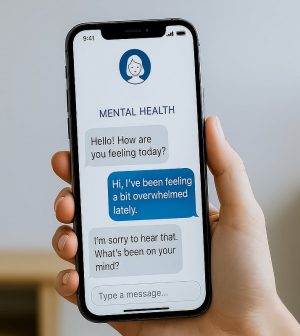
A growing number of Americans are turning to therapy by text message, and new research suggests it can be just as effective as traditional video sessions for some patients.
In a study published Oct. 30 in JAMA Network Open, researchers found that people with mild to moderate depression who used text-based therapy showed similar improvements to those who received weekly video-based therapy.
The clinical trial involved 850 adults randomly assigned to either weekly video therapy or unlimited messaging with a licensed therapist for 12 weeks.
By the end of the study, both groups reported similar improvements in depression symptoms.
“We were pleasantly surprised to see that it was as good as weekly video therapy,” study co-author Patricia Areán, a former professor at the University of Washington School of Medicine, told The New York Times. “We didn’t really find any differences in the outcomes.”
The study was supported by Talkspace, a fast-growing digital mental health platform, which collaborated with researchers to conduct the trial.
Areán said the company was seeking real-world data to support potential insurance reimbursement for text-based care, a service most insurers do not cover.
“They knew that they needed data,” Areán added.
Experts say the results could be particularly important for people who struggle to attend traditional or virtual appointments.
Text-based therapy “could eventually fit into a stepped-care model,” Dr. Jane Zhu, associate professor of medicine at Oregon Health & Science University in Portland, who was not involved in the study, told The Times.
That means starting with lower-intensity options like messaging and moving up to more intensive care when needed, Zhu explained.
The researchers also found that people were less likely to drop out of text-based therapy compared to video sessions.
But patients in the video group said their therapists were slightly warmer and more compassionate, suggesting that the bond created in face-to-face sessions may still be slightly stronger.
Areán also said there were no adverse events in the trial. But questions remain about how to build connection when patient and therapist can’t see each other.
The study excluded people with severe mental health conditions, including psychosis or suicidal thoughts, so text therapy may not be appropriate for everyone.
What’s more, during the pandemic, the number of Americans in therapy more than doubled, climbing from about 4% of the population to 8.5% by 2021.
Dr. Mark Olfson, a professor of psychiatry at Columbia University Irving Medical Center, said the findings support giving patients more options.
People with milder depression “might reasonably be offered a choice” between text and video therapy, he told The Times.
SOURCE: The New York Times, Oct. 30, 2025
Source: HealthDay
Copyright © 2026 HealthDay. All rights reserved.
Related
-
 Navigating Your Midlife Crisis: Embracing New Possibilities
A midlife crisis can open doors to personal growth...
- December 4, 2025
-
 Want A Happier Hospital? Hire More Nurses, Study Says
Adding even a few extra nurses can dramatically reduce...
- November 20, 2025
-
 Plasma Treatment Shows Promise For Menopause Symptoms Among Breast Cancer Survivors
Plasma infusions may help breast cancer survivors avoid genital...
- November 20, 2025
-
 Self-Hypnosis Can Thwart Hot Flashes
Self-hypnosis might help some women in menopause find relief...
- November 14, 2025






